COMMUNITY BUILDING + SYSTEMS THINKING
State of Black Design 2024
Creating accessible, engaging artifacts for a community-oriented, design focused conference.
Role
Design Project Manager
Timeline
Jan 2024 - March 2024
Team
4 Designers, 6 Copywriters, 2 Promotion, 6 Documentation

Overview
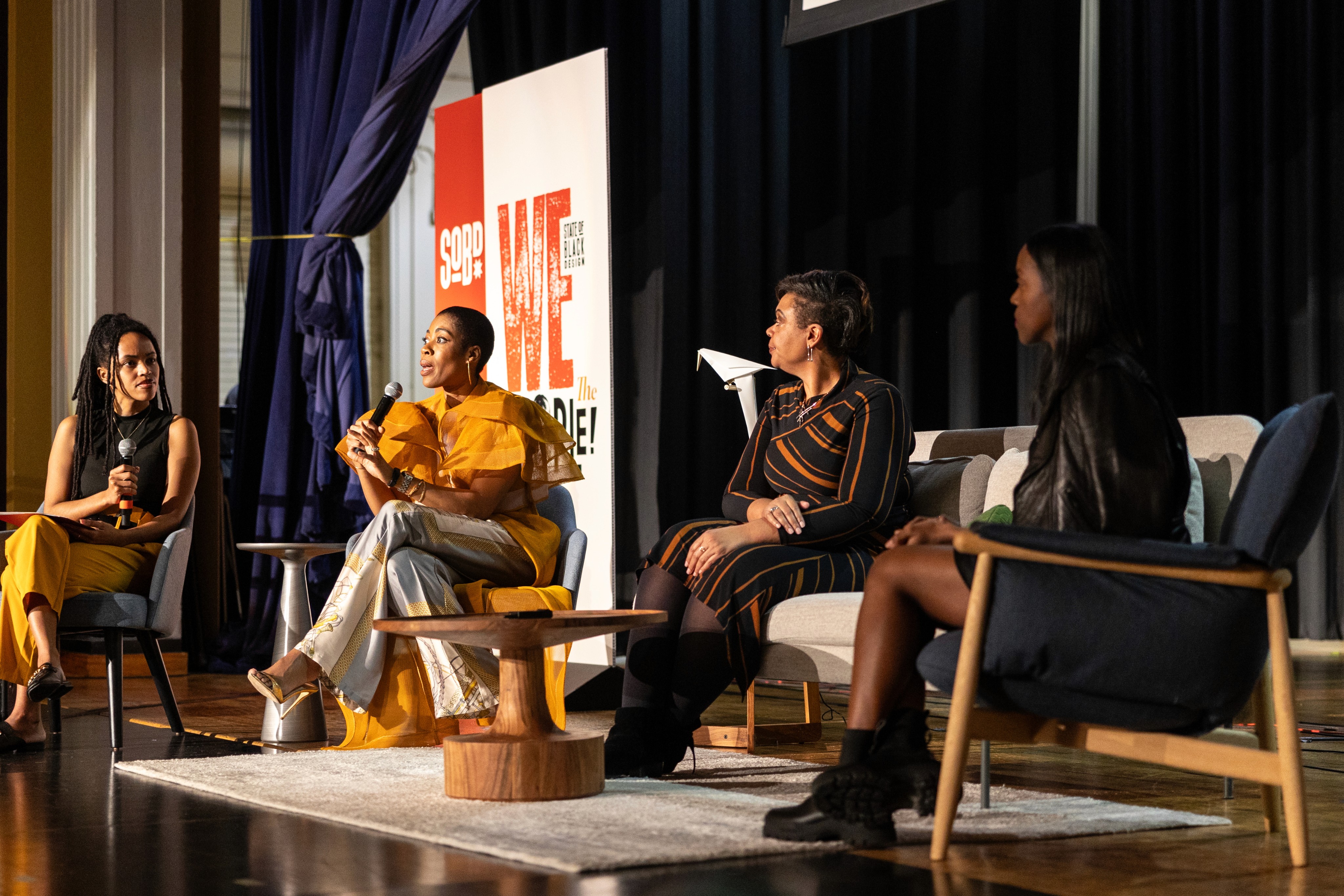
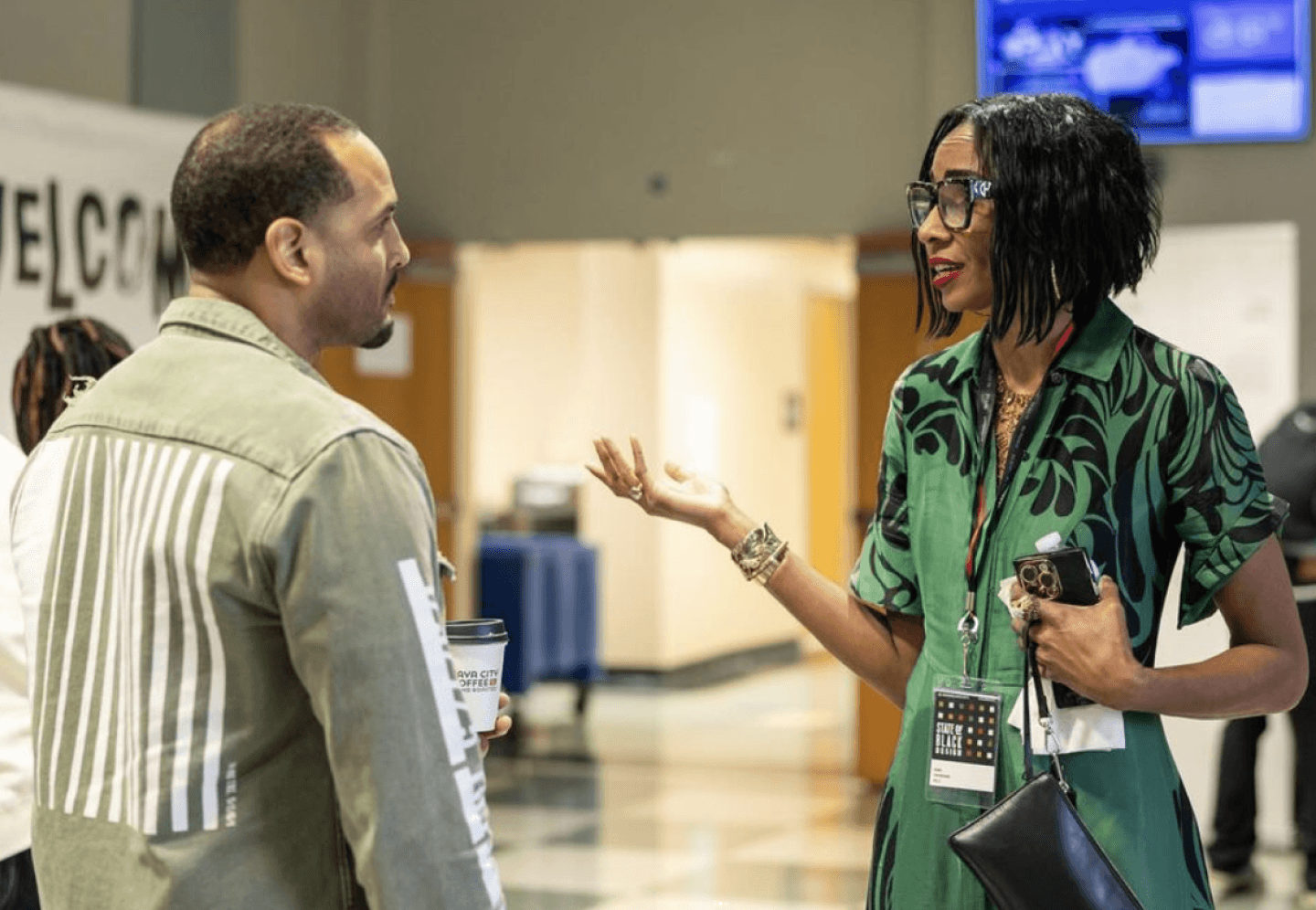
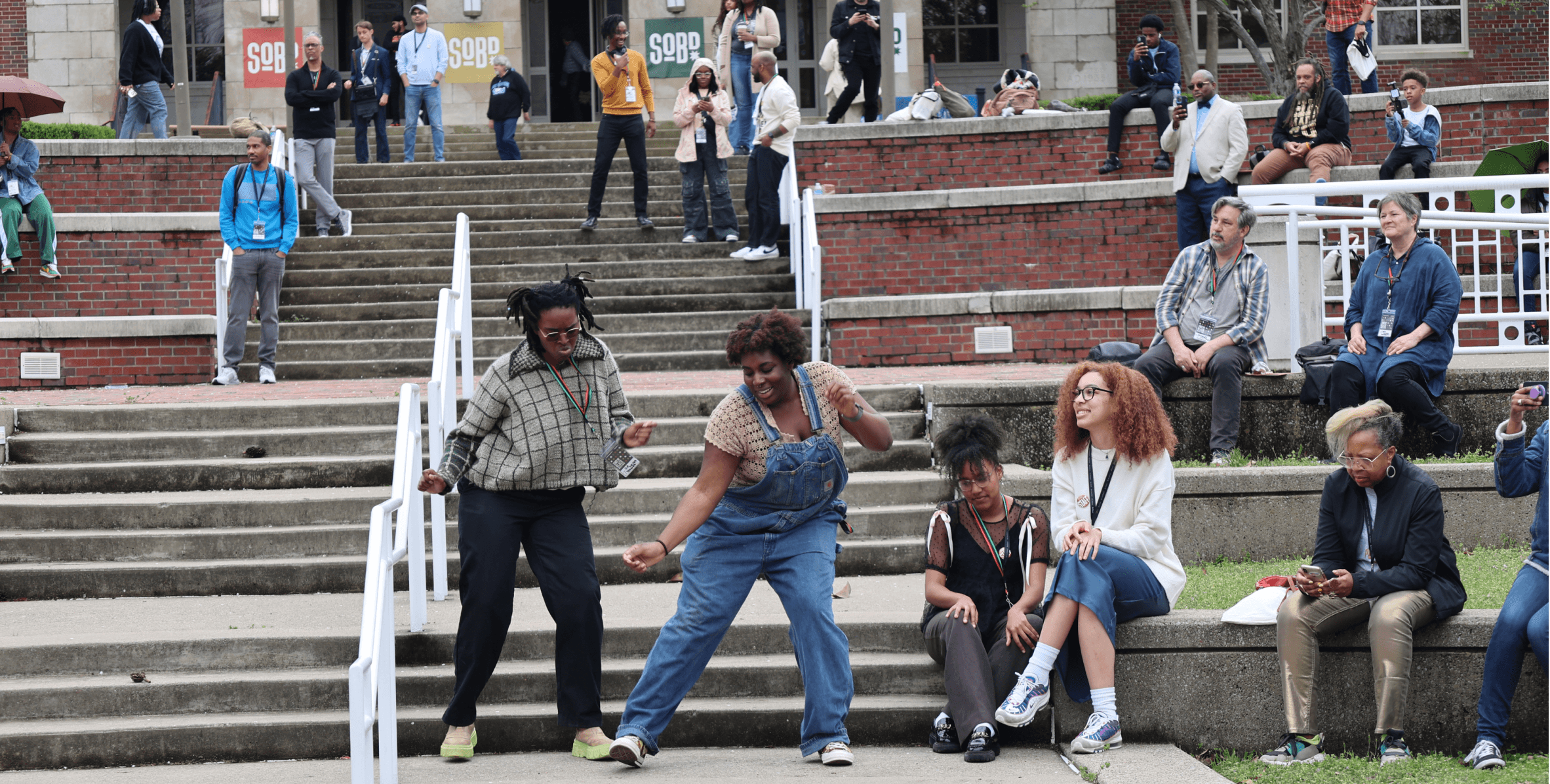
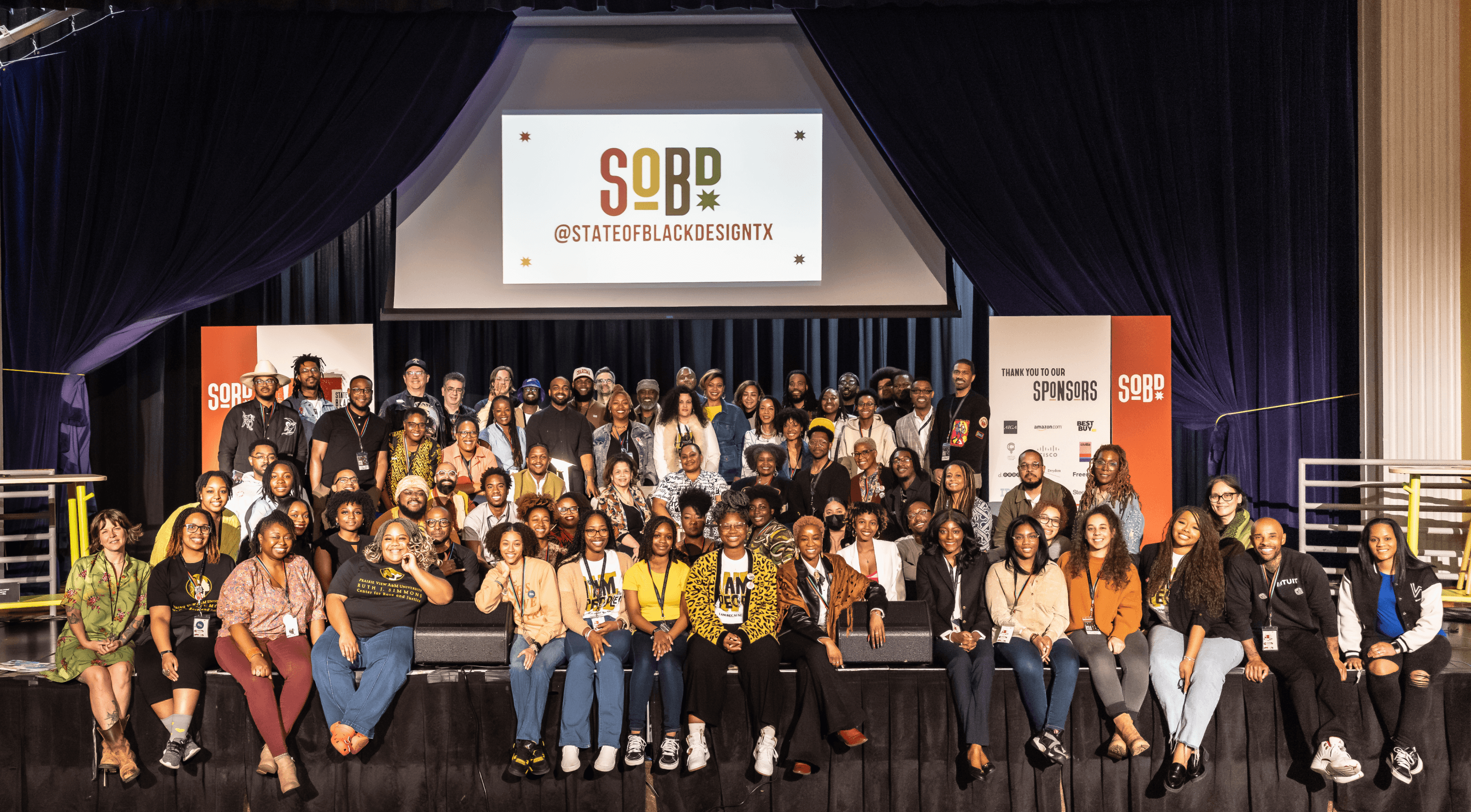
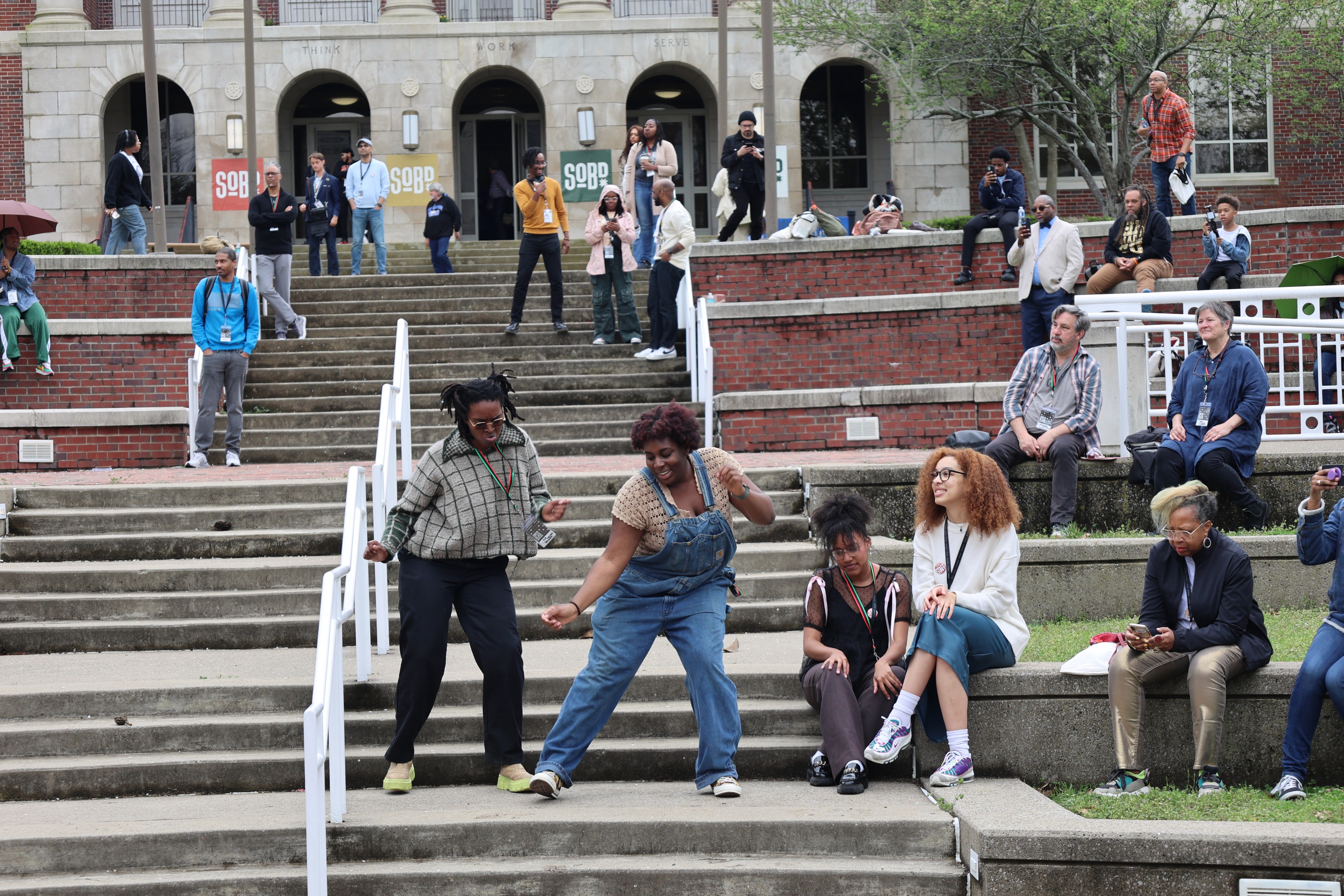
Over 500 professionals and students attended SOBD’s first in-person conference in March of 2024.
Starting as an online panel in 2020, the State of Black Design conference provides opportunities for students to network with and learn from industry professionals. To ensure that this conference was successful, our team worked to understand attendee needs, update existing website materials, and create physical conference materials.
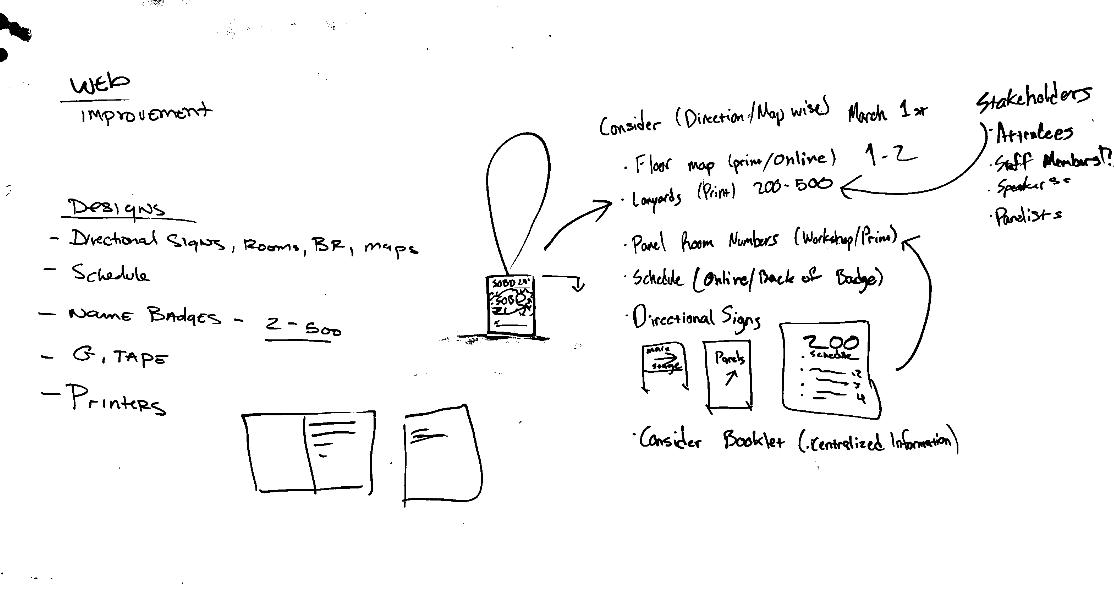
Project Organization
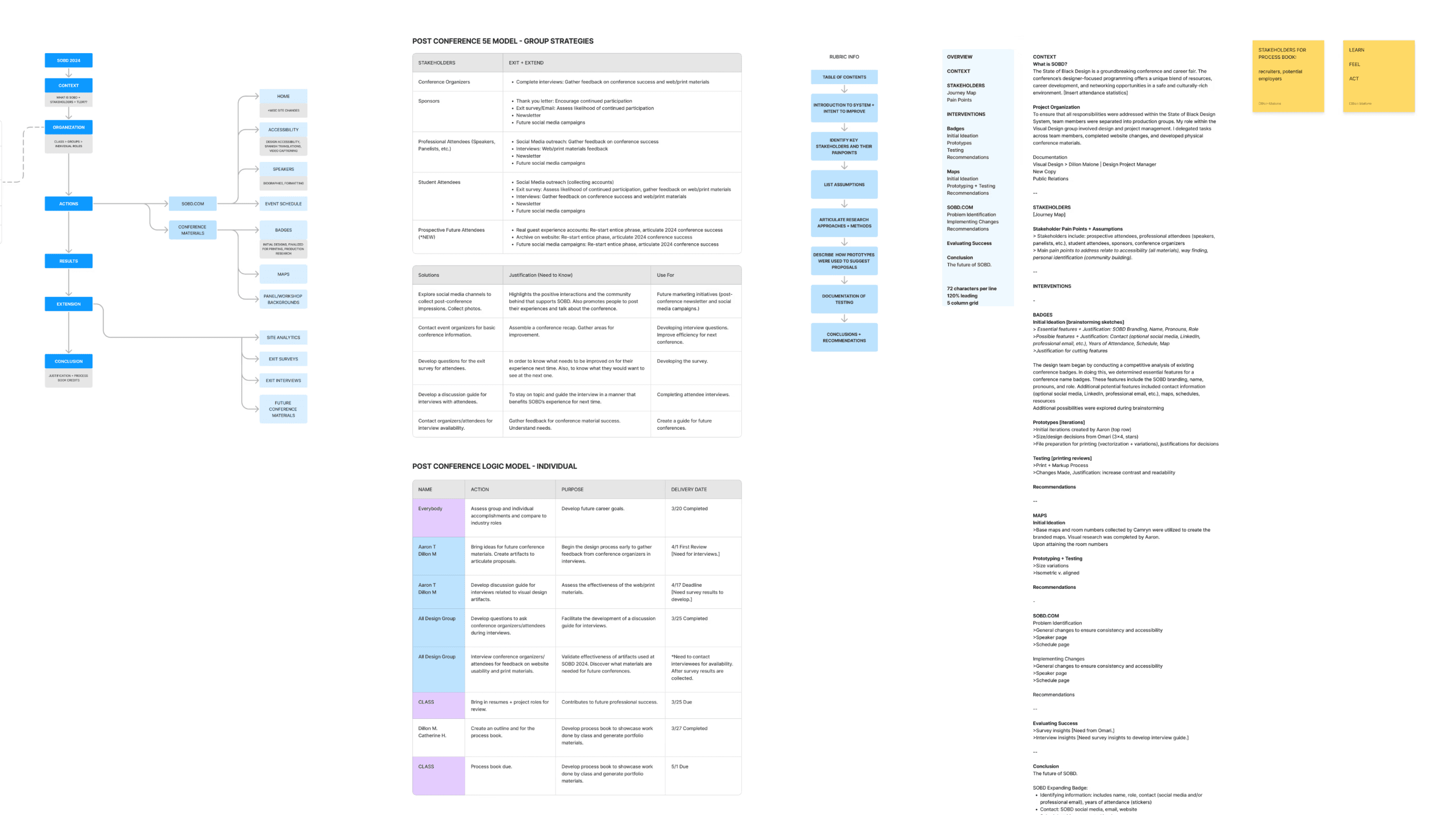
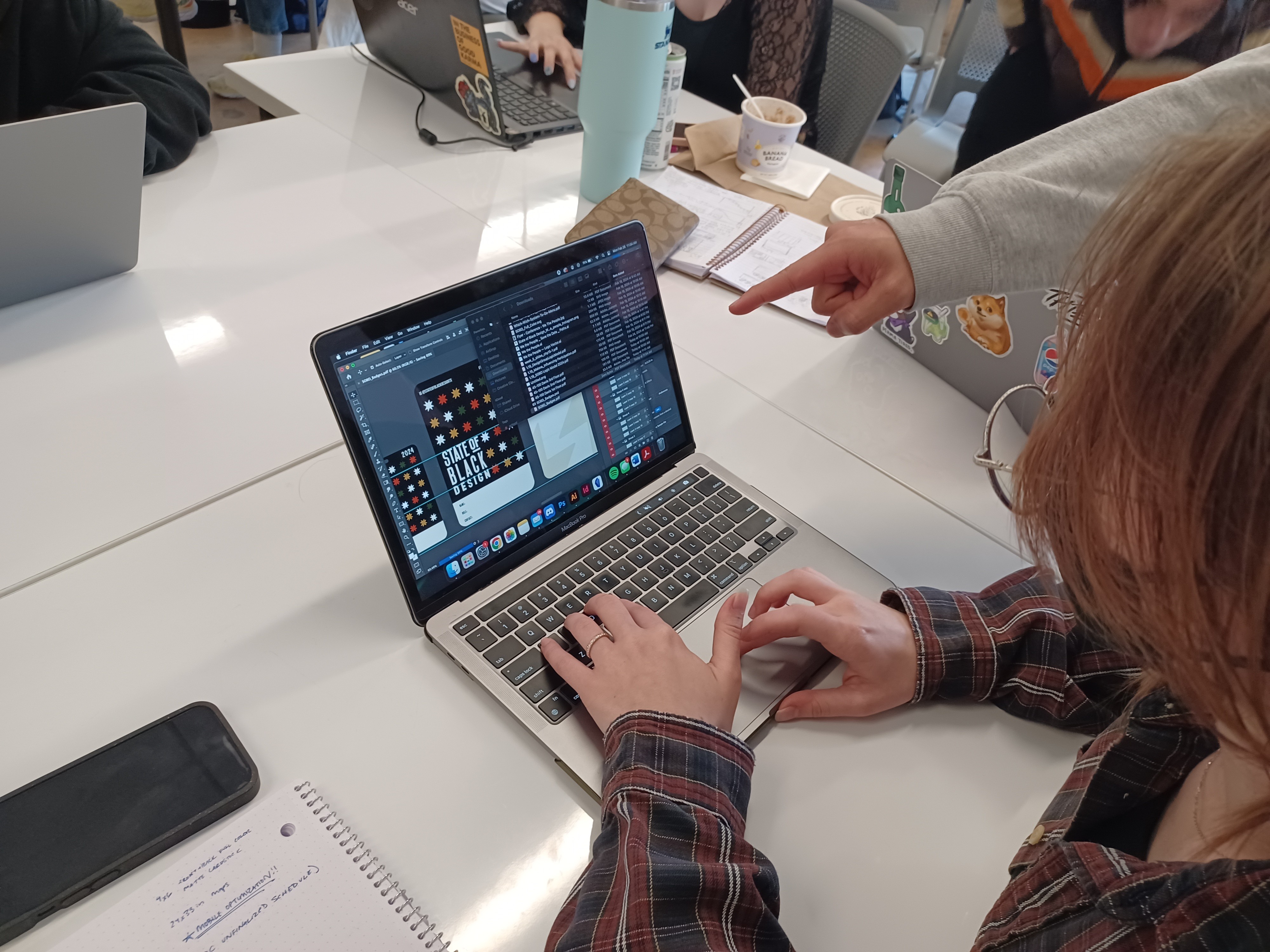
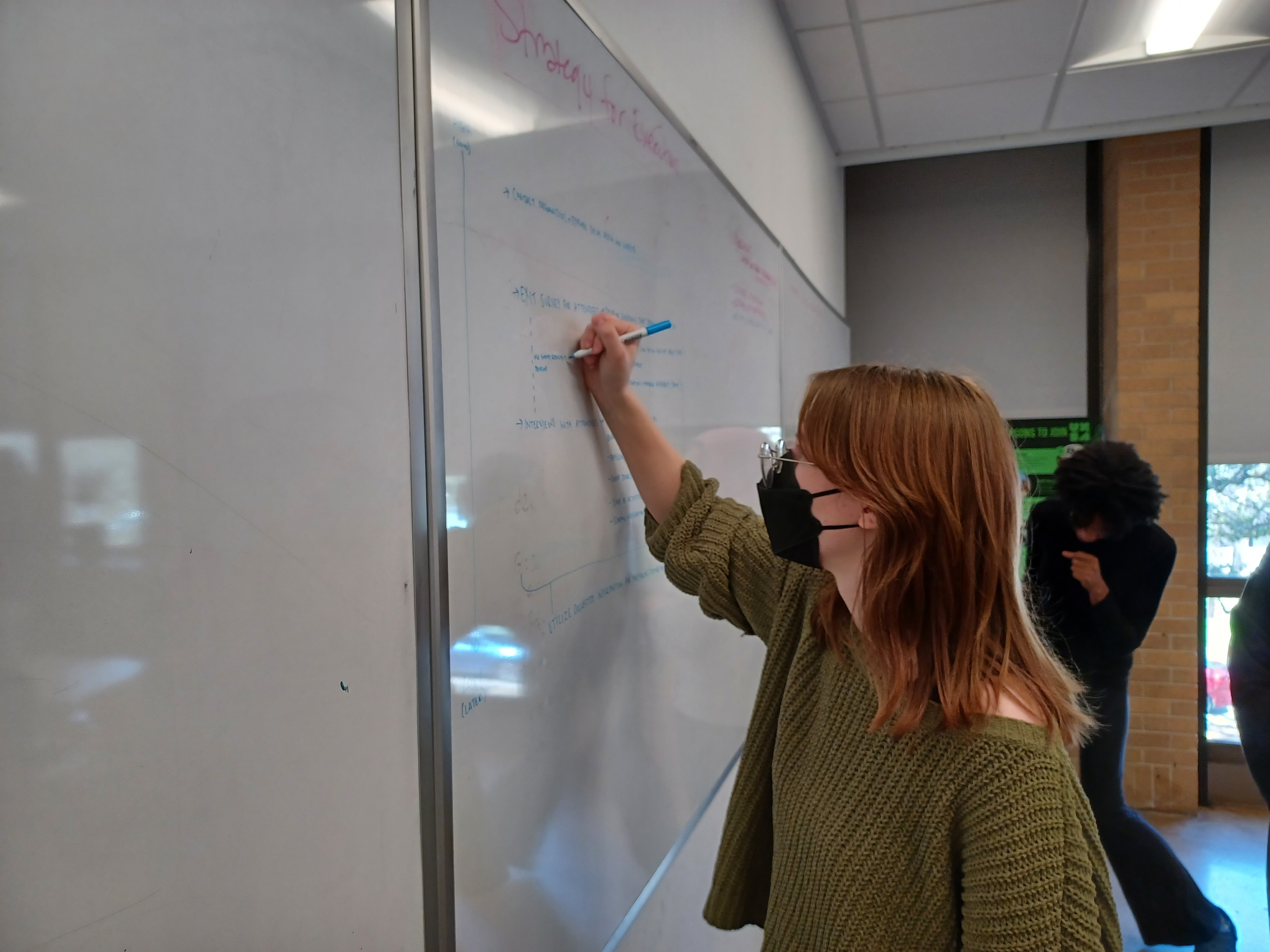
To ensure that all responsibilities were addressed within the State of Black Design System, team members were separated into production groups.
My role within the Visual Design group involved design and project management. I delegated tasks across team members, completed website changes, and developed physical conference materials.
Documentation
Visual Design > Dillon Malone, Design Project Manager
New Copy
Public Relations

Attendees
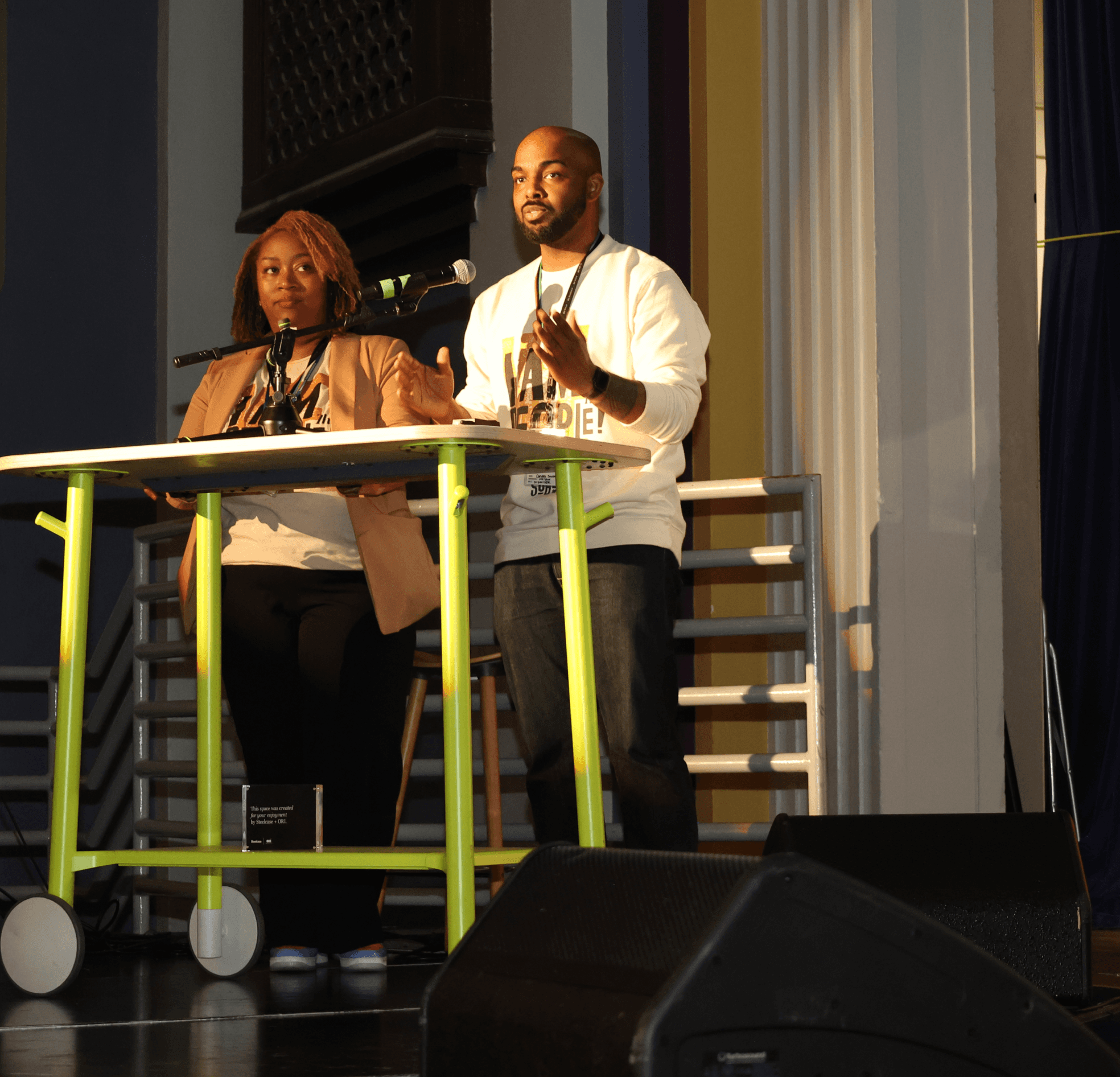
Attendees include design industry professionals, educators, students, and sponsor representatives. This user group was the primary audience considered for the visual design group.
Speakers + Panelists + Workshop Hosts
Speakers, panelists, and workshop hosts are industry professionals involved in the programs offered at the State of Black Design conference. Many of these individuals are also event attendees, so they have overlapping goals. These professionals are pillars for community.
Event Organizers
Event organizers are those that have been historically involved in the conception of the State of Black Design conference. They provide key information into conference details and needs. Early communication was not established.
Needs for Prospective Attendees:
Engaging web and promotional materials that ensure registration for the conference.
Needs During the Conference:
Navigation and information display.
Stakeholders
Artifacts produced for SOBD 2024 must be engaging, accessible, and assist in strengthening the design community.
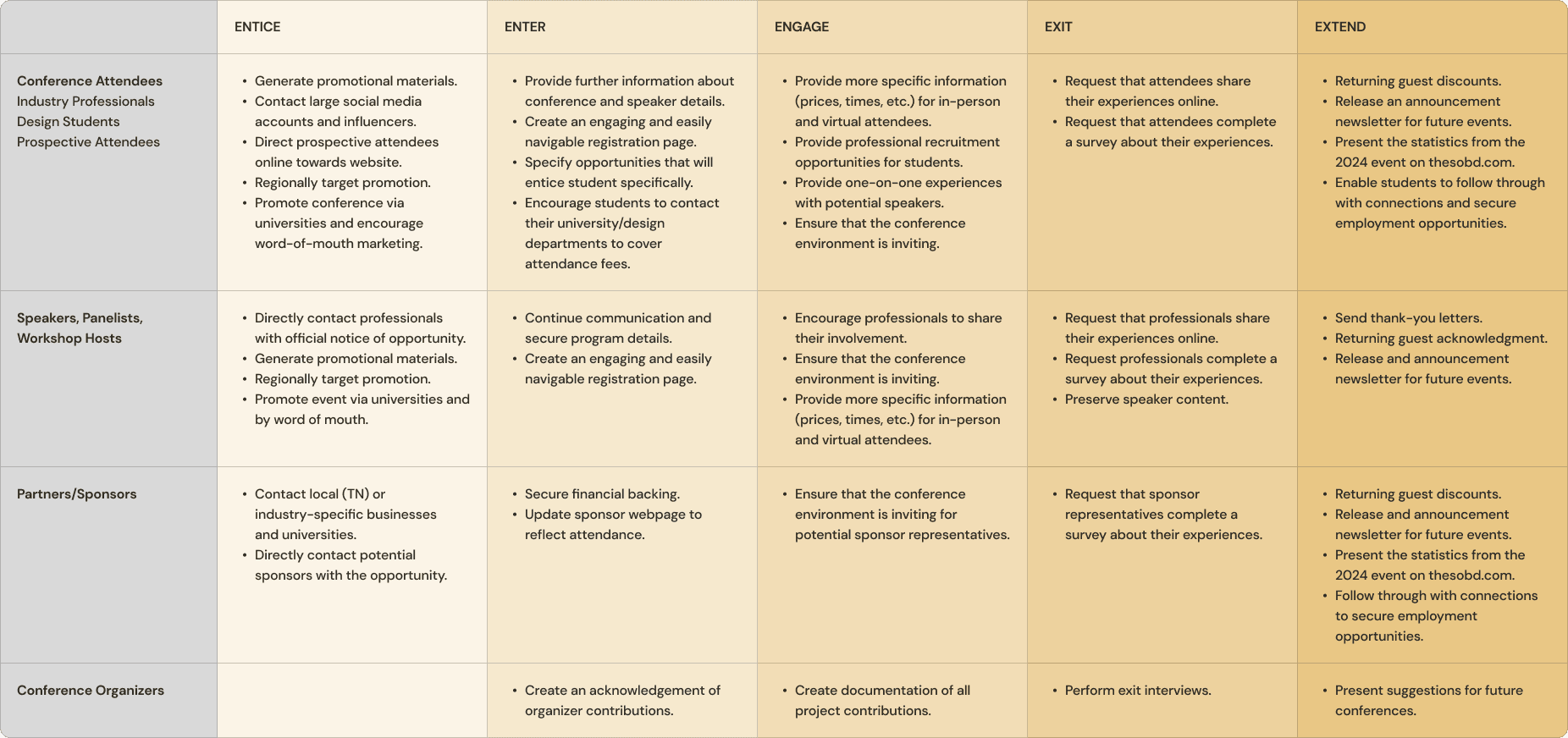
Note: This model was created during early project planning stages and may not reflect later initiatives.
5E Strategy
NAME BADGES
Prototyping
Decisions were made based on conference organizer feedback and printing parameters.
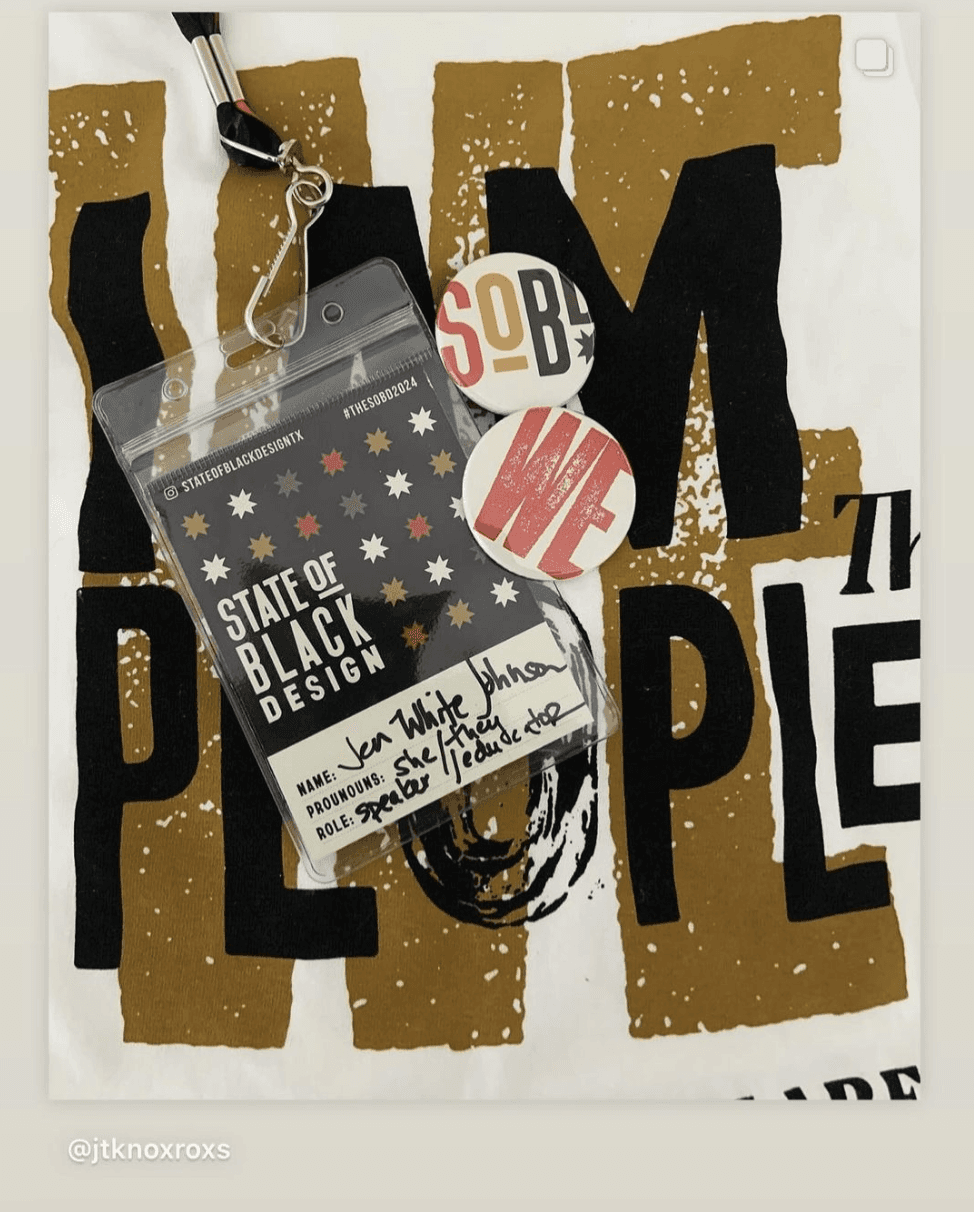
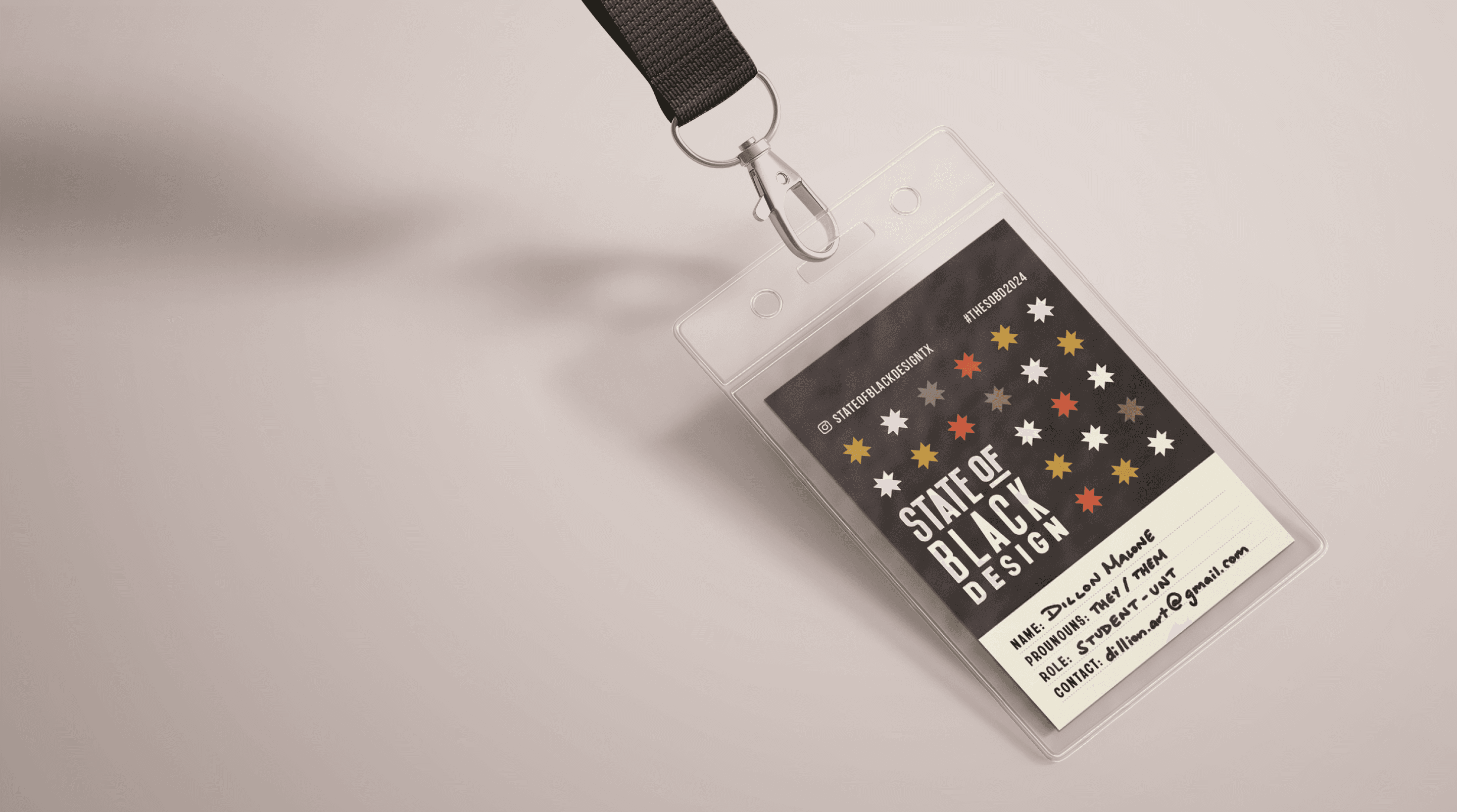
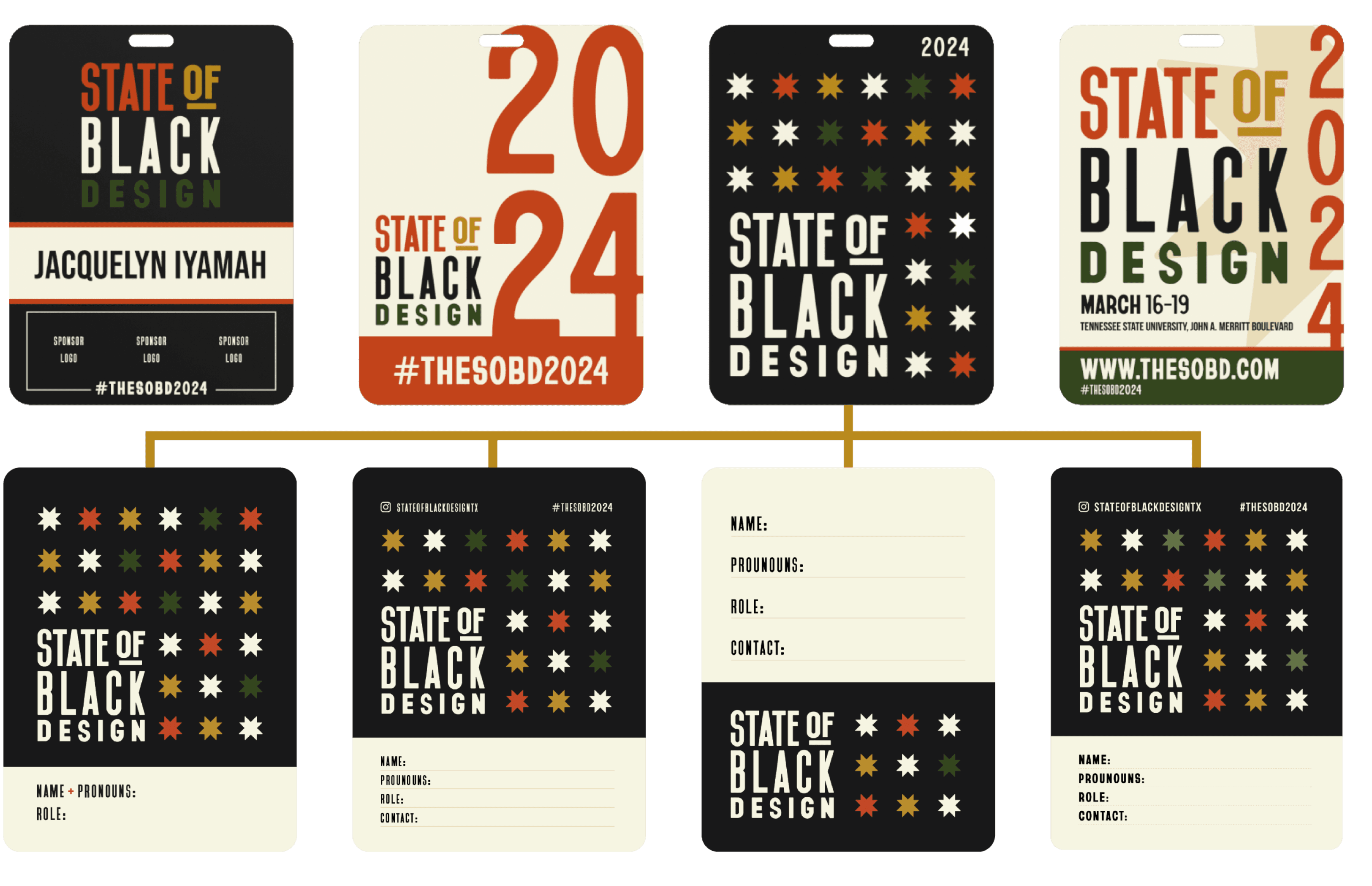
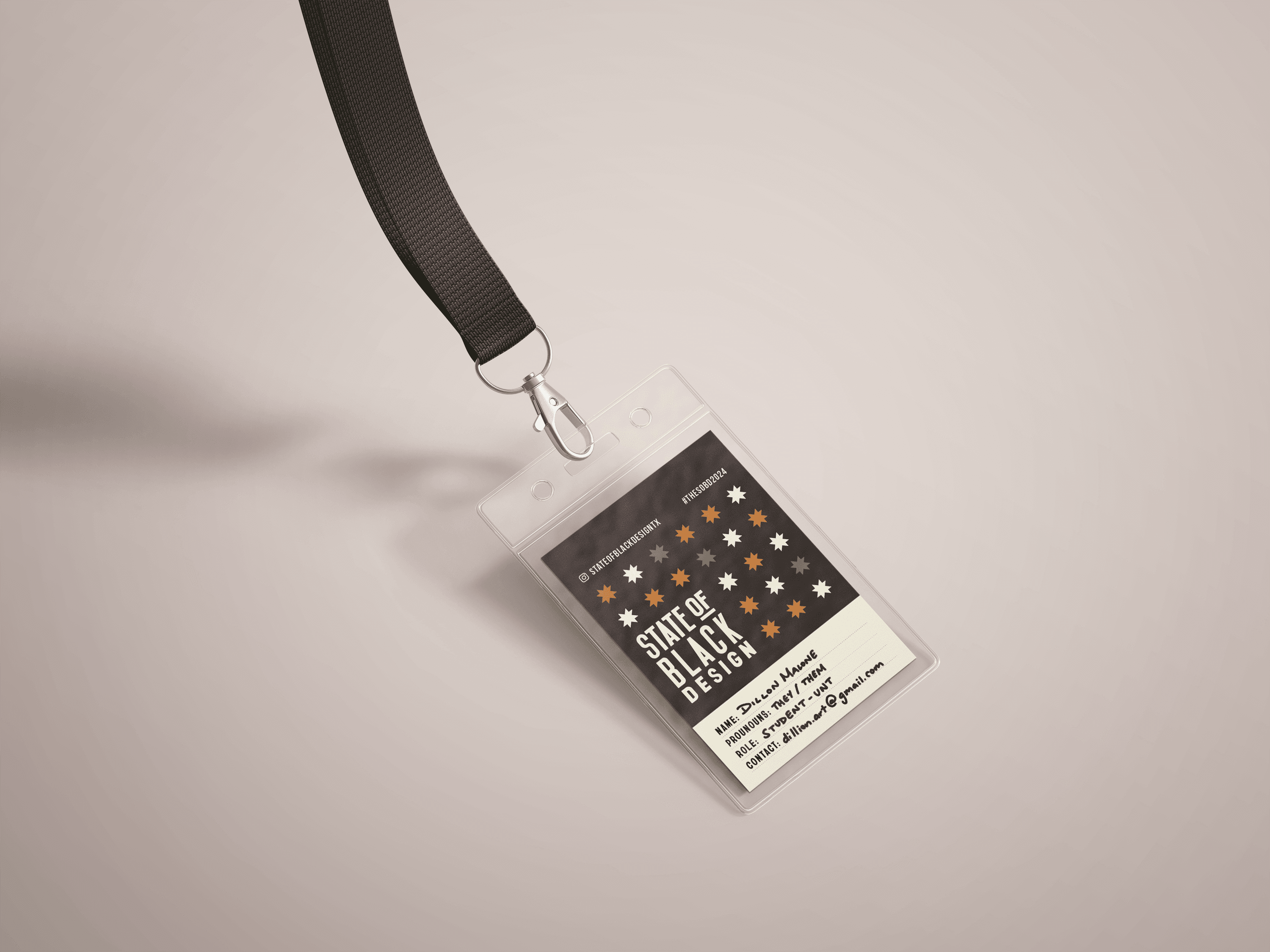
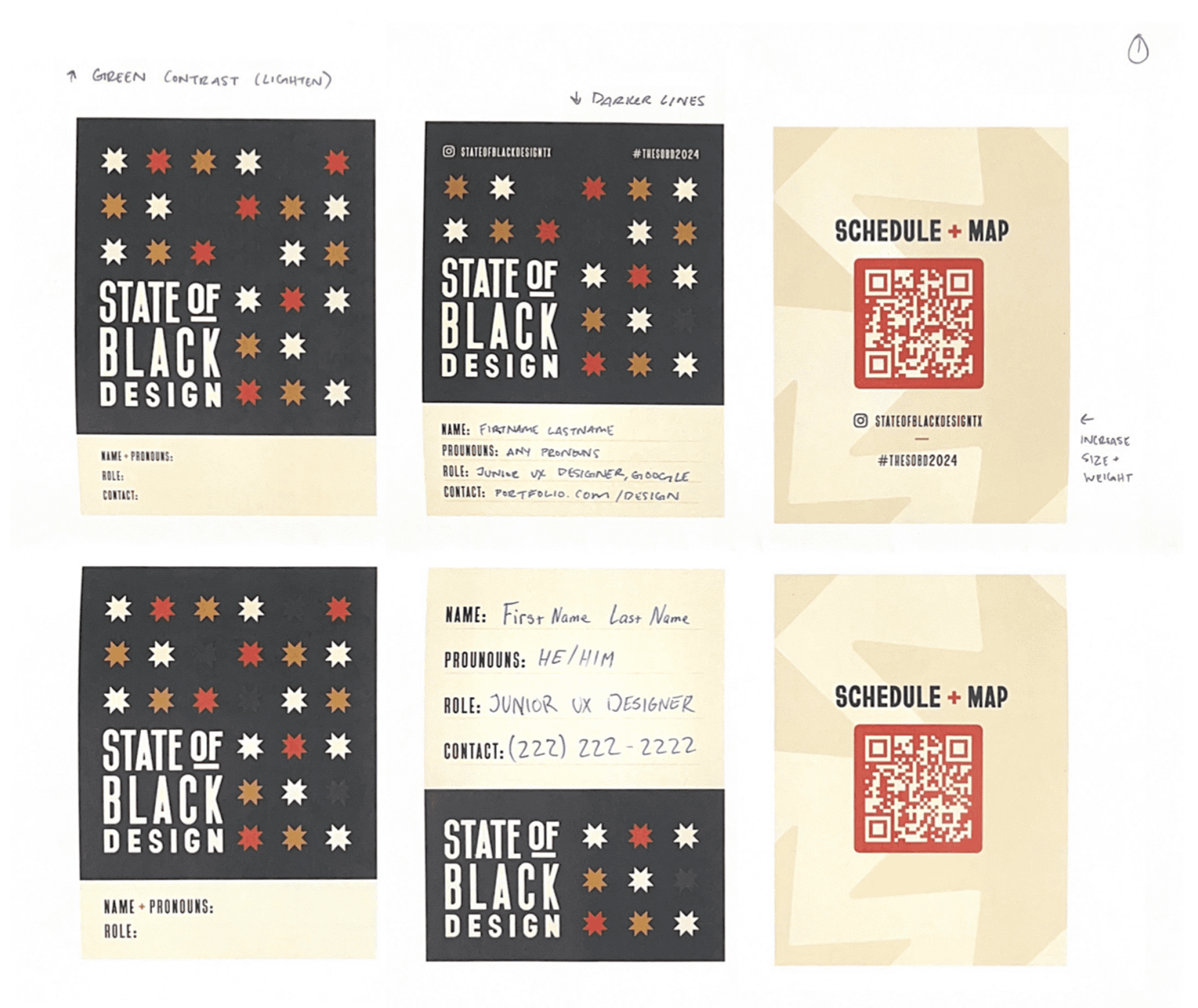
The initial iterations (top rows) of the conference badges were created by visual design team member Aaron Tang. After the design direction was decided by conference organizers, I converted the chosen design into a vector file and created additional iterations to include a blank fields for attendee identification information.
Many decisions were made due to printing time constraints. As an attendee list was not available, we created a design that includes blank informational fields. Fortunately, this option was more personal for attendees.
Purpose
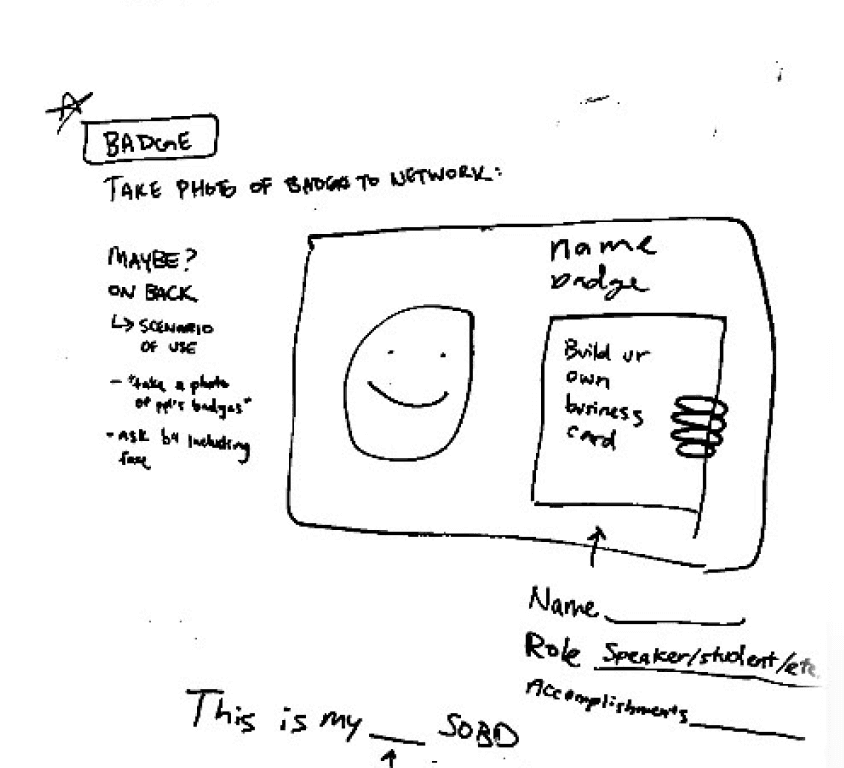
Conference name badges are key to establishing personal connections and building community.
The design team began by conducting a competitive analysis of existing conference badges. In doing this, we determined essential features for a conference name badges. These features include the SOBD branding, name, pronouns, and role (student, professional, etc.).
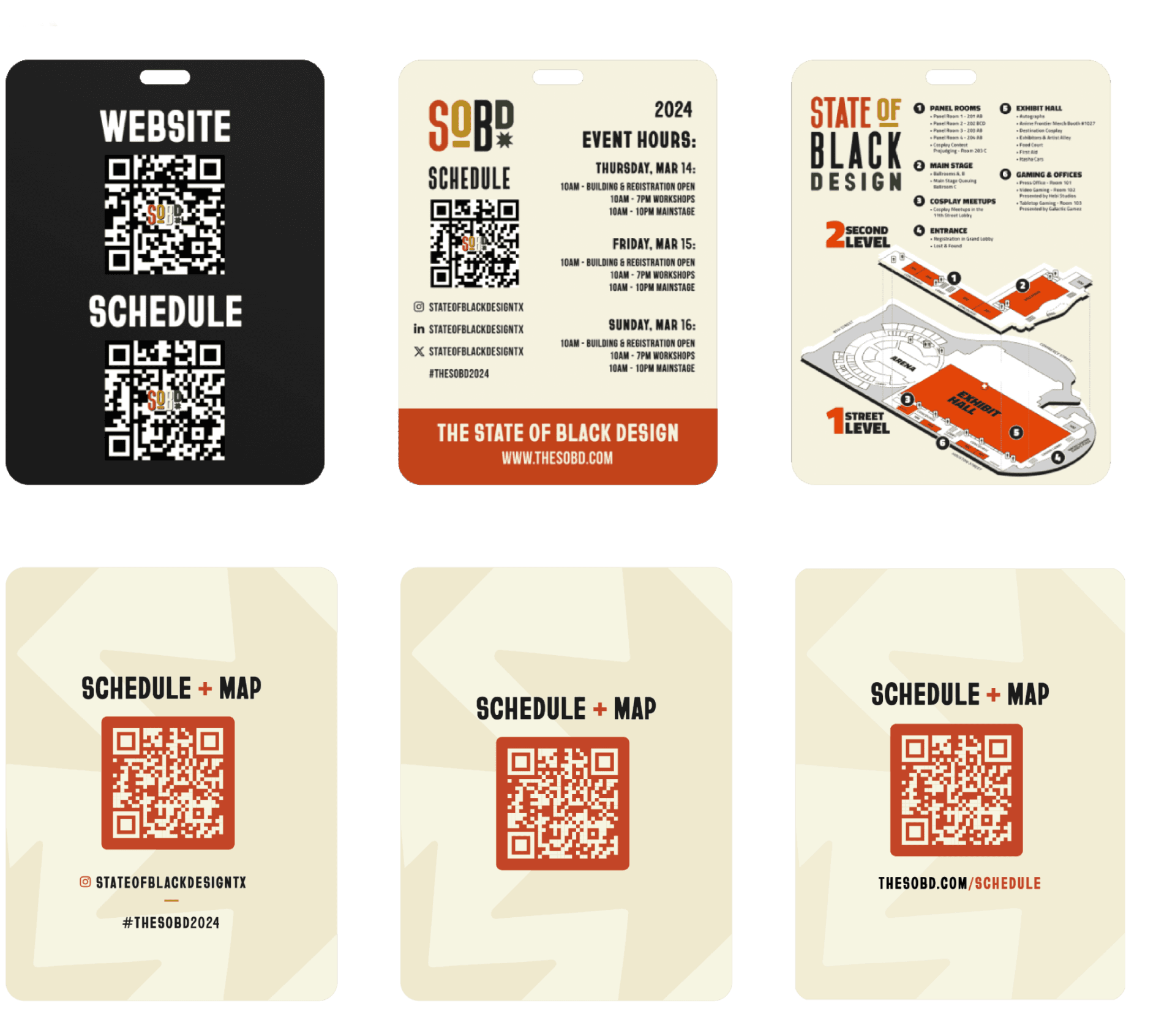
Additional potential features included contact information (optional social media, LinkedIn, or professional email), maps, schedules, resources. During this stage, a conference organizer was approached for feedback regarding what features were essential to include.

MAPS
Purpose + Planning
Accessible maps are essential to conference navigation.
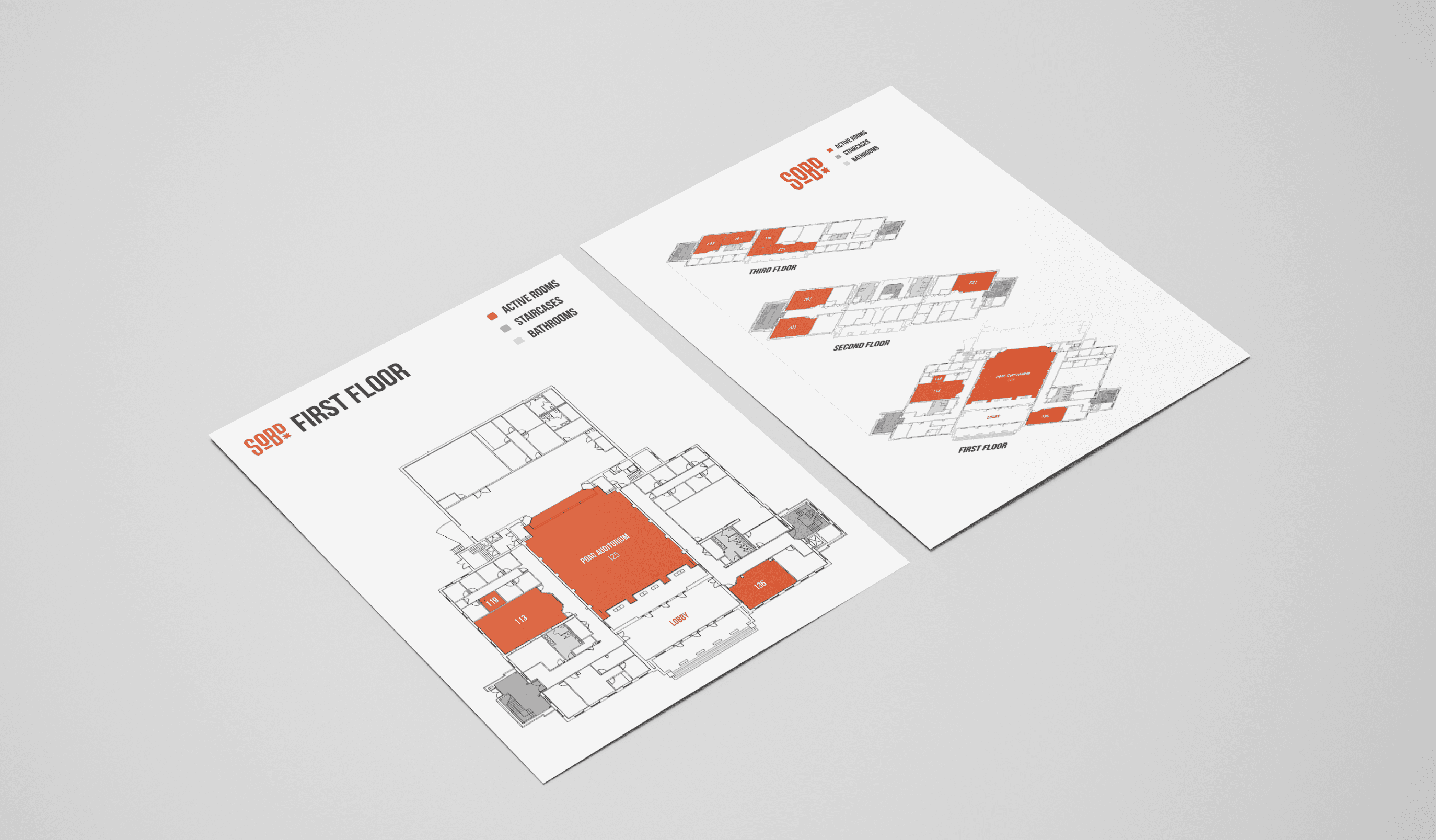
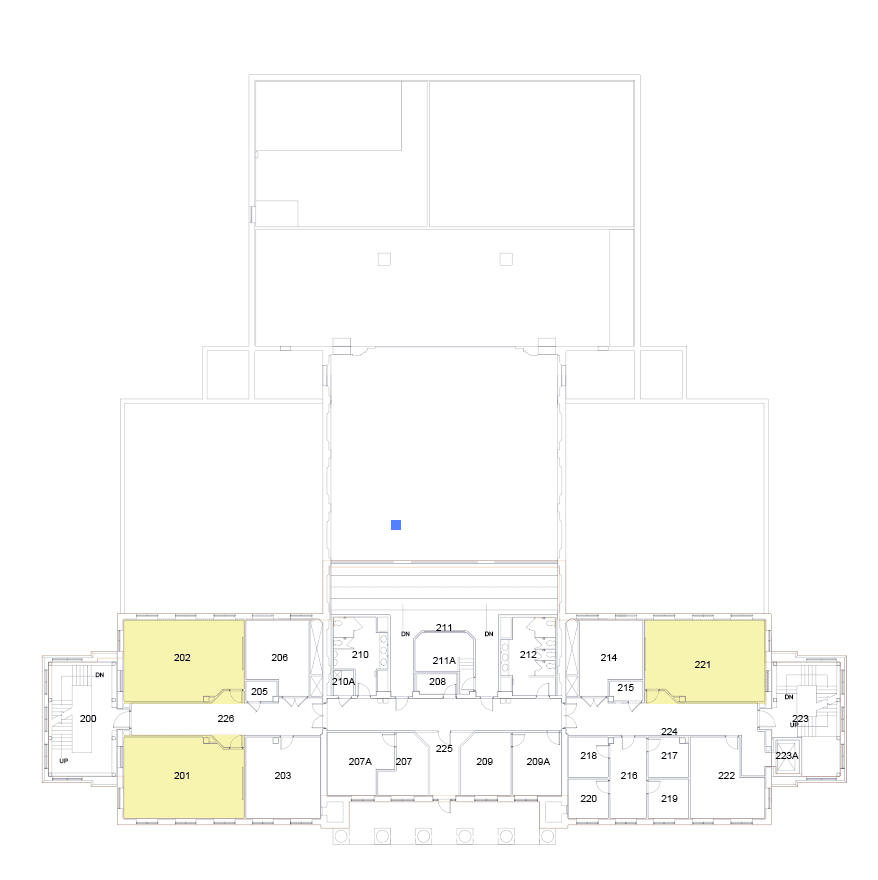
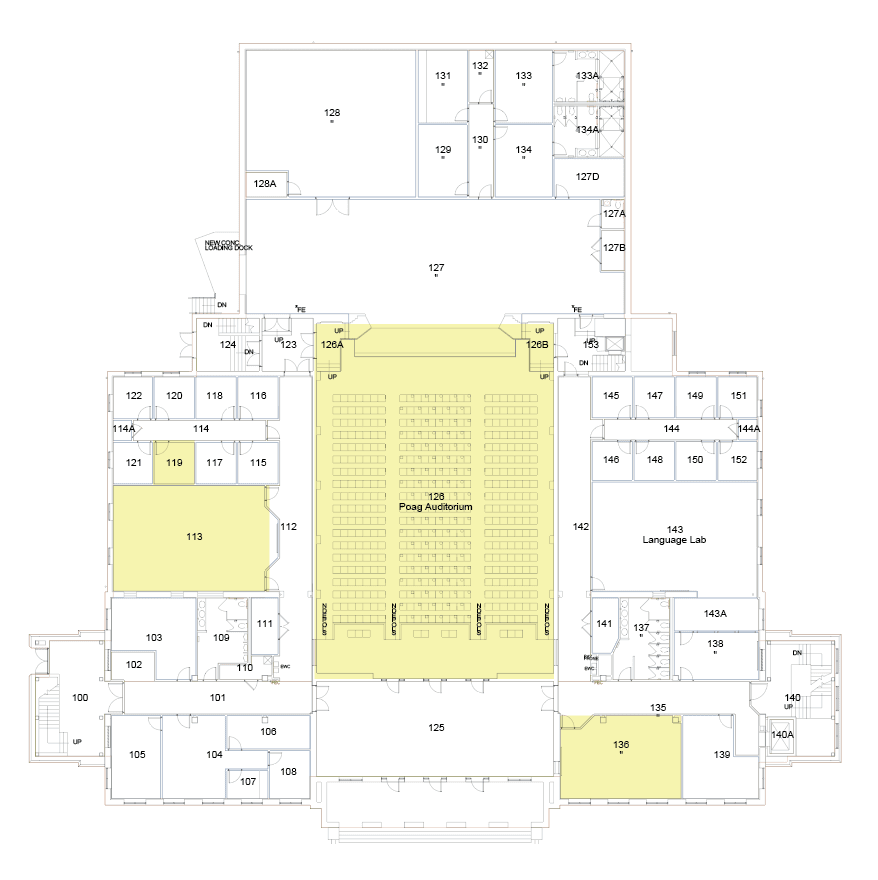
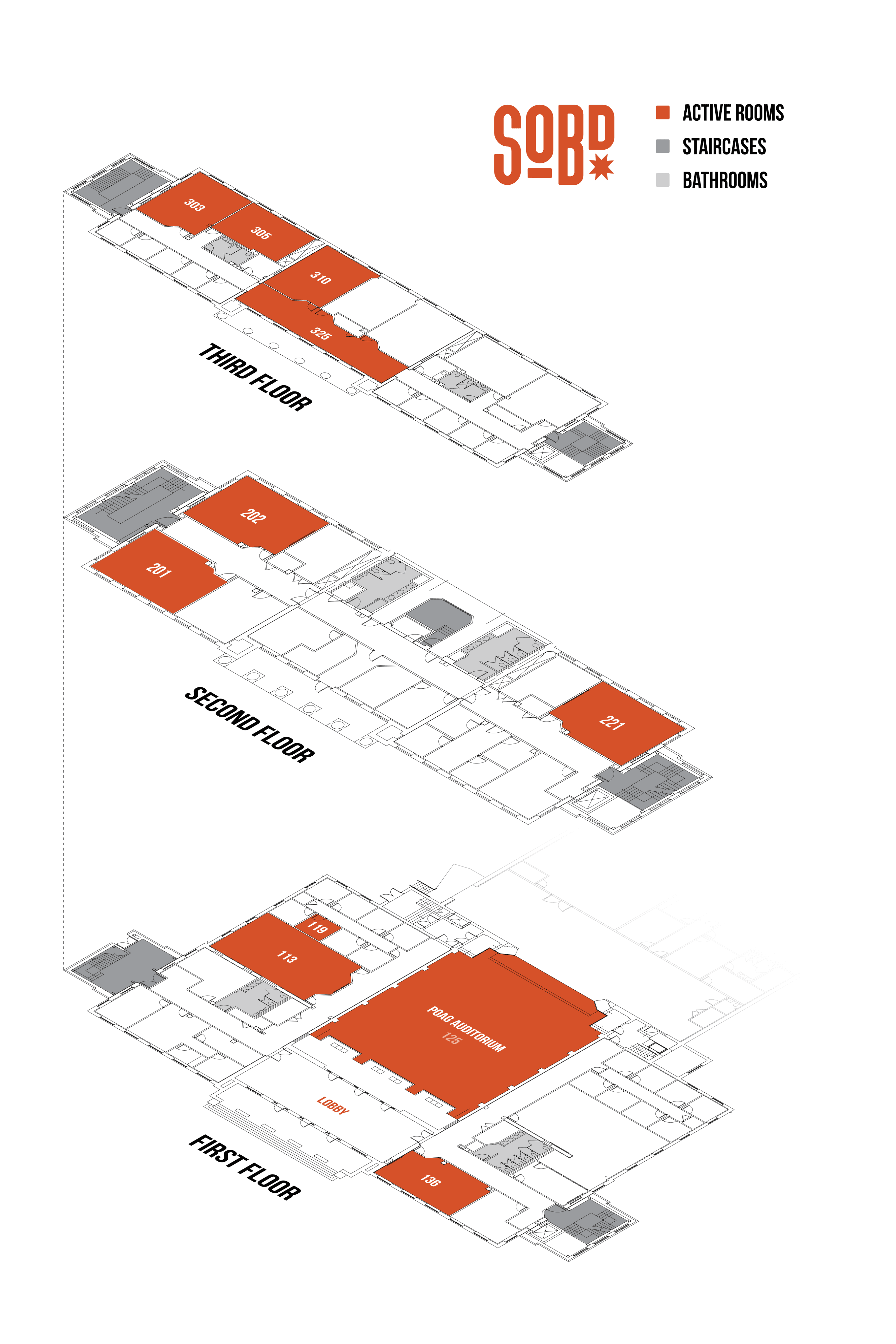
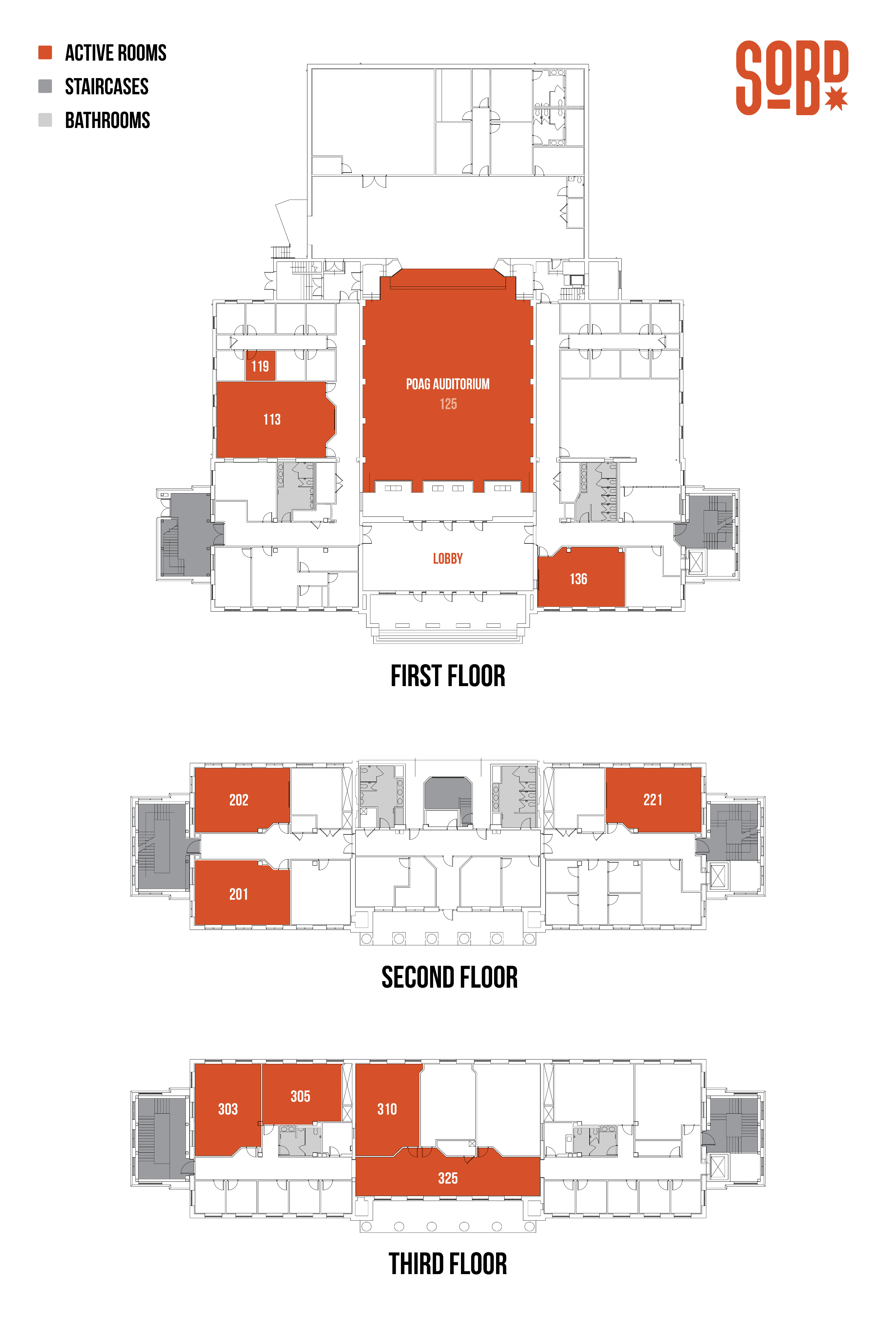
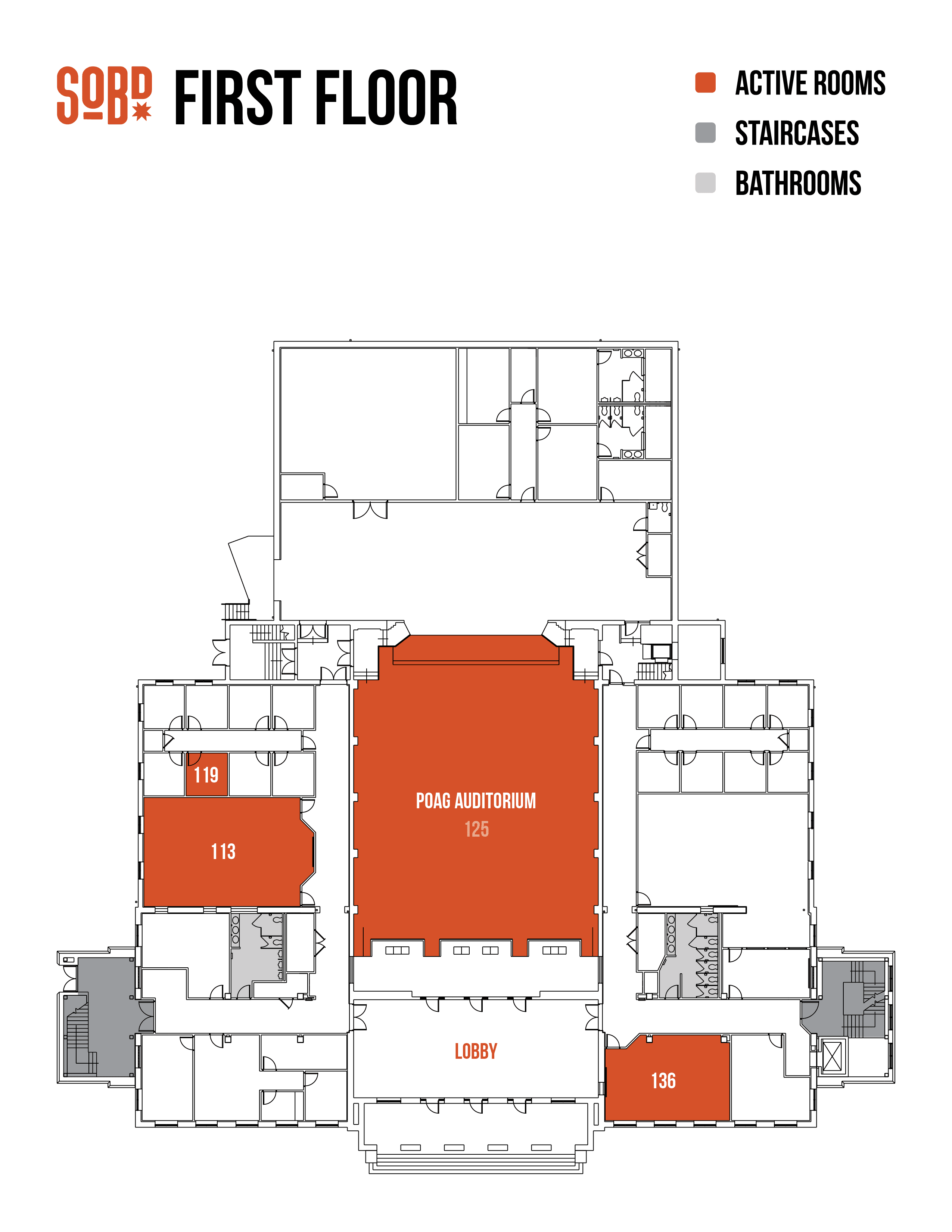
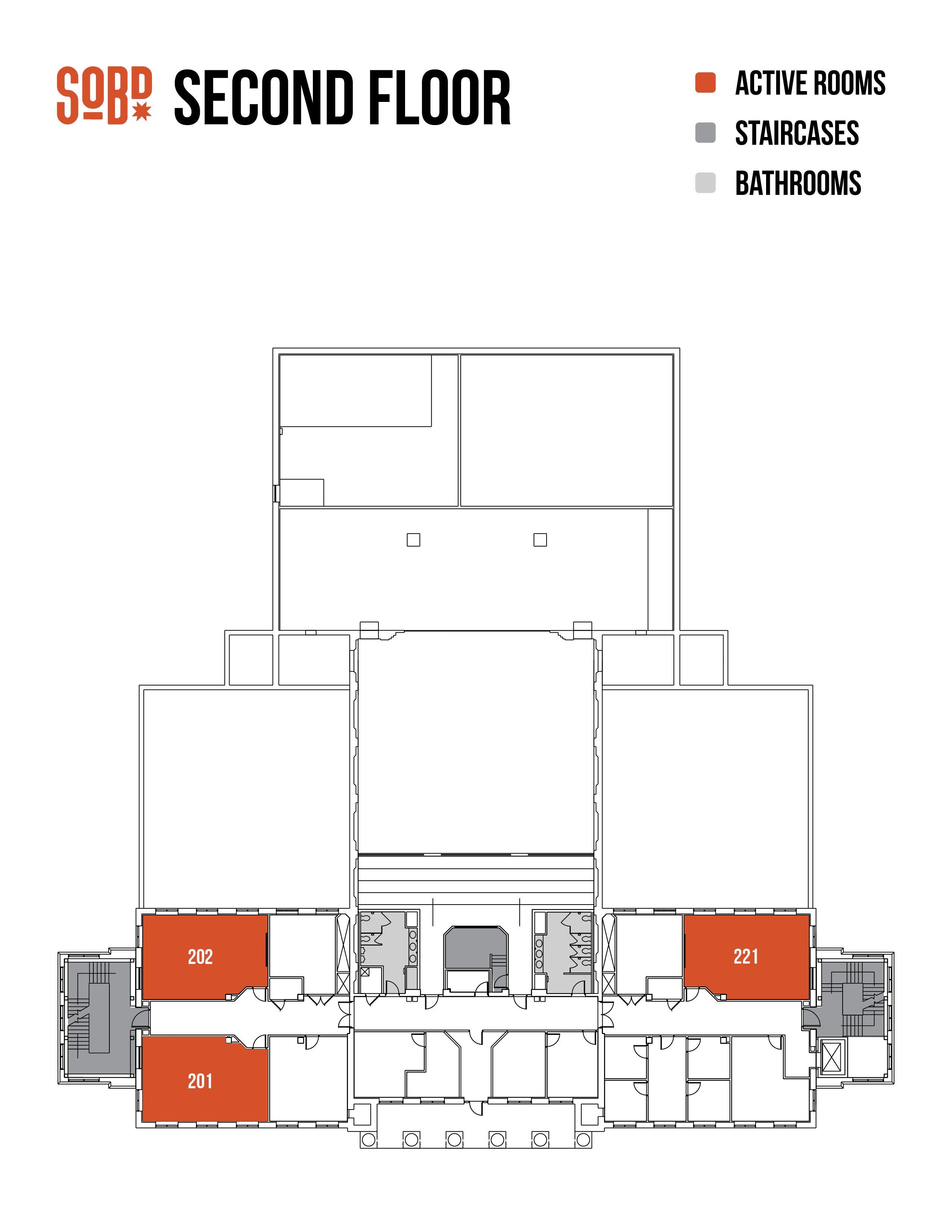
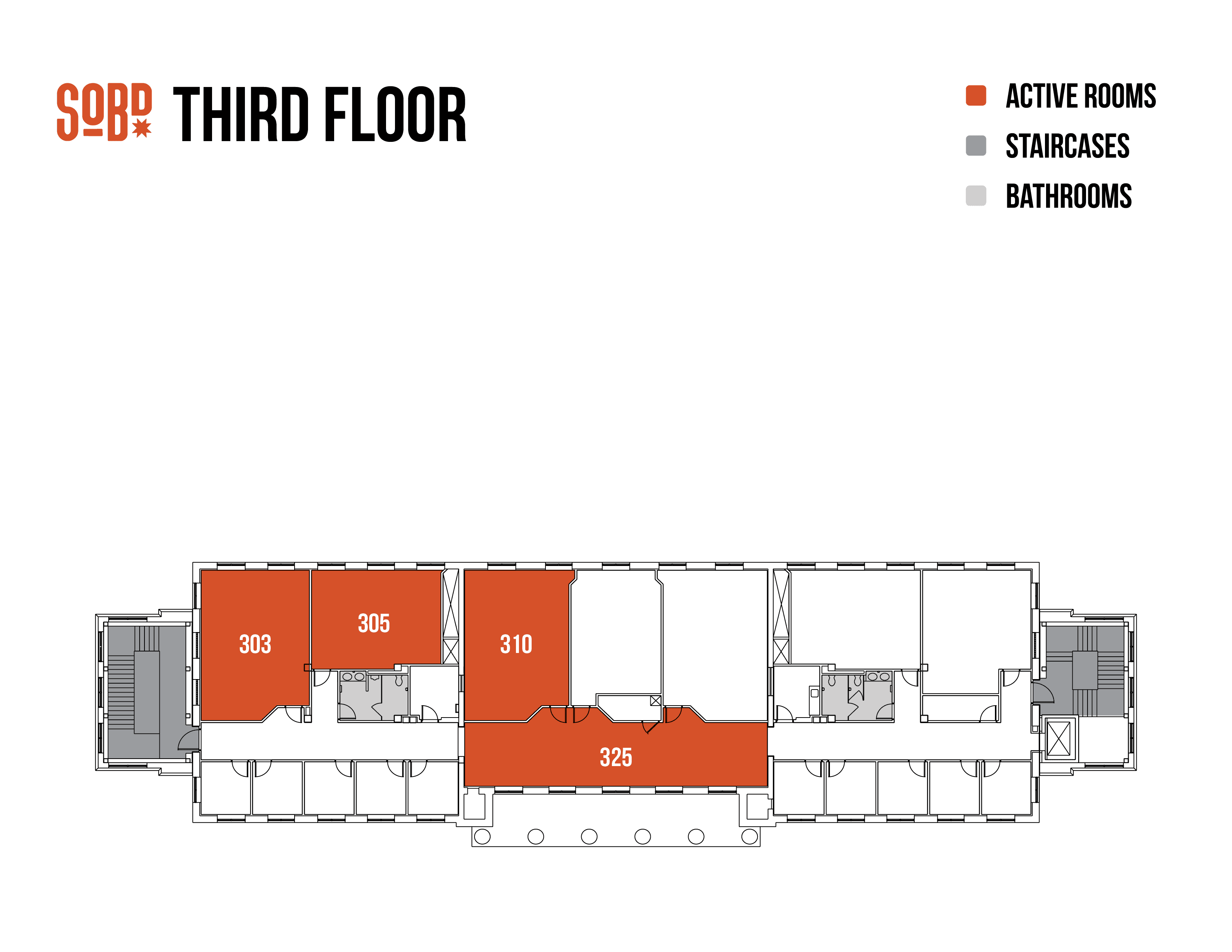
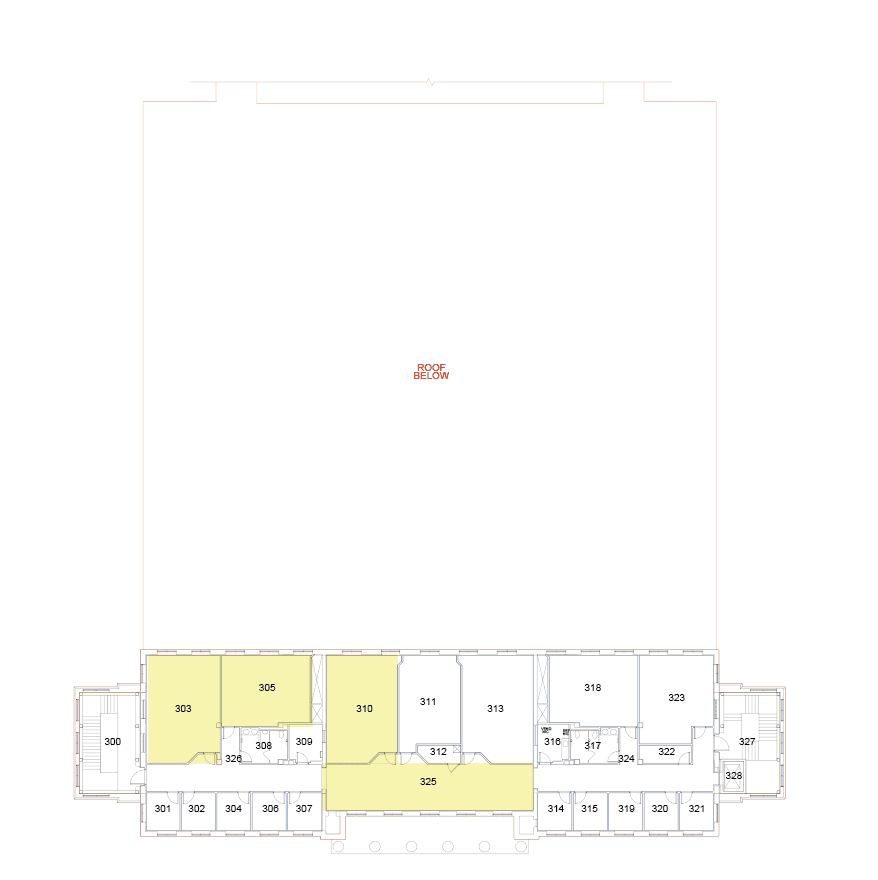
Base maps and room numbers collected by Camryn Yanes were utilized to create simplified branded maps. Visual research was completed by Aaron. Upon attaining room numbers, I highlighted each location and identified bathrooms and staircases. Creating the maps involved removing any unnecessary information for attendees.
Prototypes
Prototyping + Testing
Variations were created so the maps could be displayed at multiple sizes.
Two sizes were planned. For the larger 24-by-36 inch option displaying all floors, two options were created. Smaller single floor views were created to display on individual floors.
Print testing determined that key information and room numbers were legible when printed at scale. During testing, the isometric view was found to be less legible.
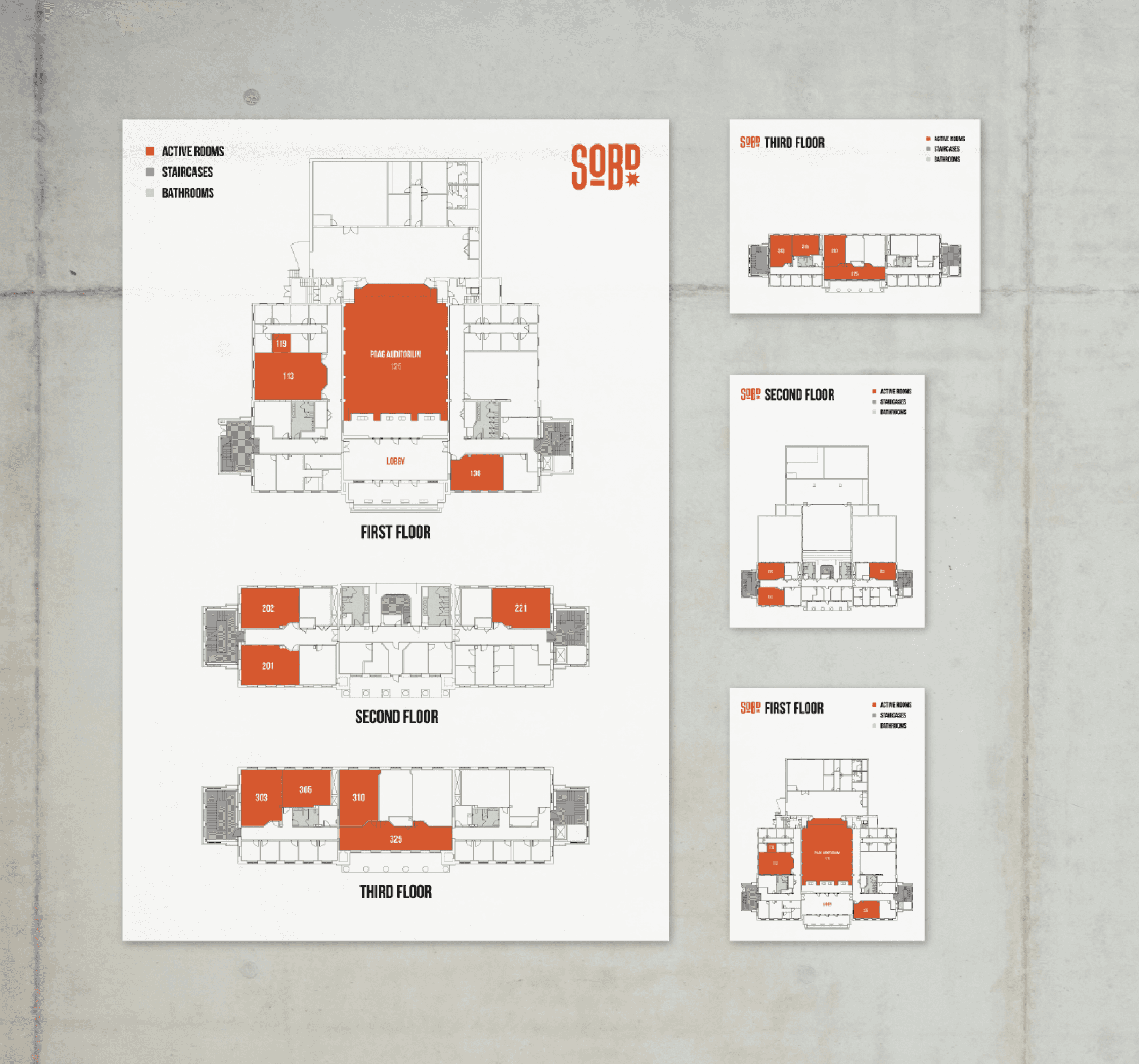
24 ’’ X 36 ’’
8.5 ’’ X 11 ’’
Recommendations
Certain steps should be taken with future physical navigational materials.
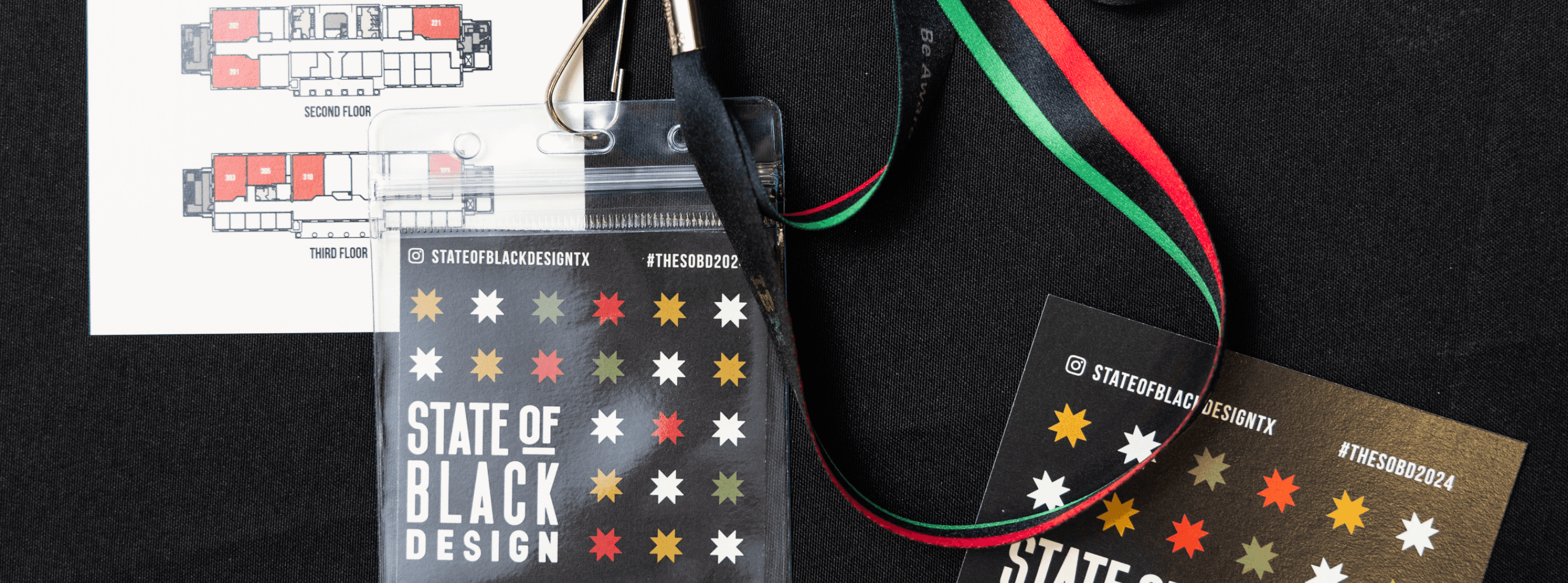
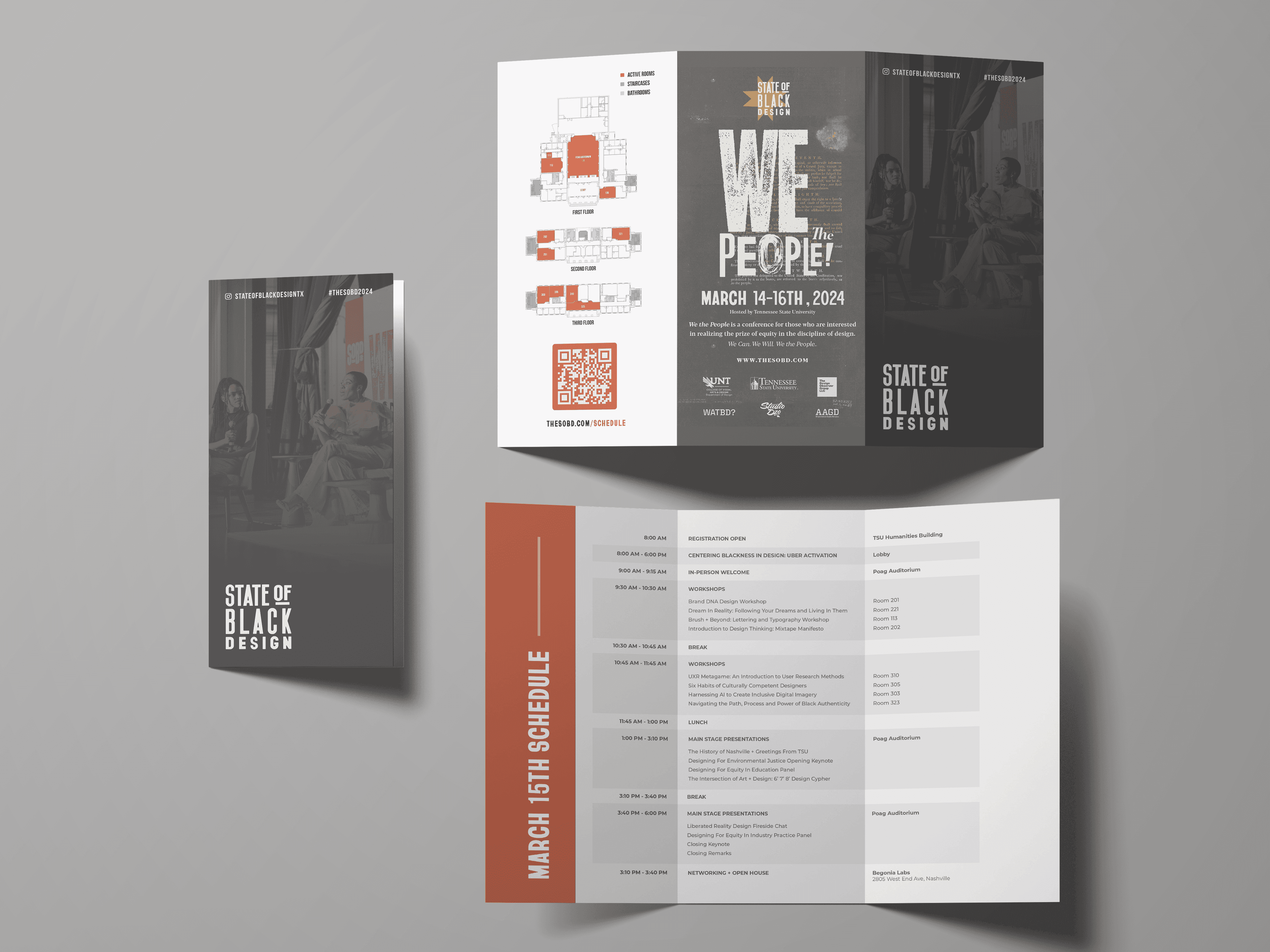
For the conference, the maps were not printed at the recommended sizes and were less legible as a result. Maps should be displayed on venue walls. Smaller maps can be dispersed to alleviate crowding. Badges, conference schedules, and maps should ideally be separated materials.
Evaluating Success
Based on interviews with conference attendees, the planned aspects of my interventions were successful.
Pitfalls occurred where there was a disconnect between my planning and testing processes and conference organizers. Some goals (related to schedule materials) could not be reached due to time constraints. Accessibility issues were caused by unchecked changes made by external parties. If my recommendations regarding time management and communication are followed in future years, these pain points will be mitigated.
The Future of SOBD
Early planning will ensure that visual design materials can be extensive and serve to strengthen the community.
With a strengthened communication network established in advance, design materials can be created to improve navigation at the future State of Black Design Conferences. Beginning preparation as early as possible will allow sufficient time for quality planning and iteration. This approach will ensure that artifacts effectively reduce barriers for all conference attendees.
Expanded Name Badges
In-Person Navigational Materials + Schedule
Accessible Website Information
Testing
Printing tests revealed what adjustments needed to be made
to ensure that the name badges
were accessible.
Badge designs were printed at scale (two-by-three inches) to ensure that contrast was sufficient, blank spaces were large enough, and all text was a readable size. Changes completed after these tests included lightening the green stars, and adding dashed lines within the blank informational fields. Based on various writing tests, the visual design team determined which option was most accessible.
Recommendations
Based on post-conference feedback, certain steps should be taken to ensure success with future name badges.
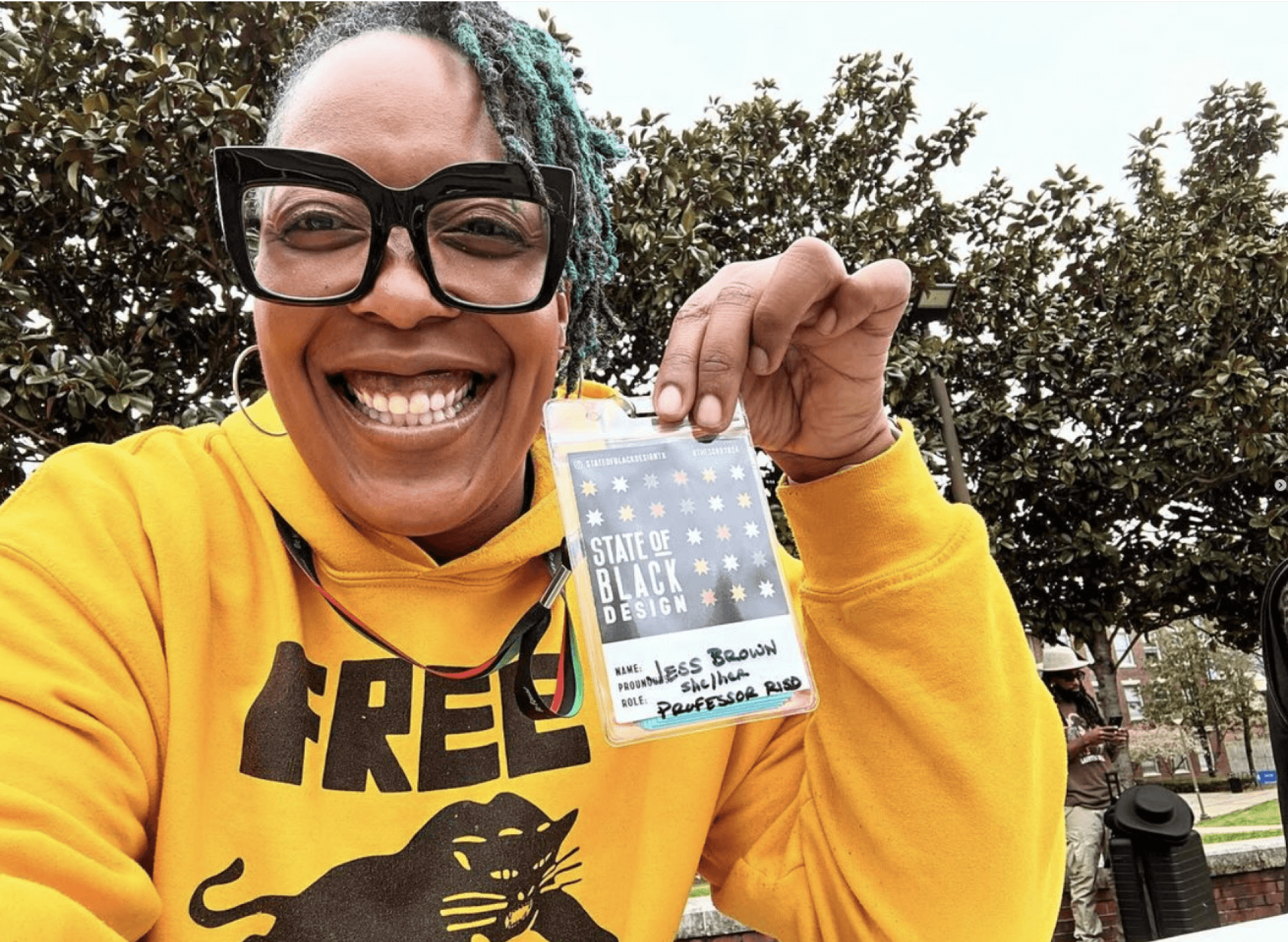
Badges, conference schedules, and maps should ideally be separated materials. If additional information needs to be included within the badge, they should be larger. Schedule information should be provided in advance to ensure sufficient time for testing and printing.
An additional observation was that some attendees wrote information on the external sleeve, rather than the badge itself. To remedy this, empty sleeves and printed badges should be separated when they are given to attendees.